


Collections
Library
Type
Region
Coverage:
-
Published:
-
Reuther Library, Wayne State University
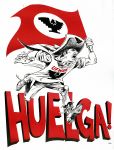
450 images covering mostly 1960s-1970s The United Farm Workers of America is the most influential farm-labor union in America. Founded in southern California, in the small San Joaquin Valley agricultural town of Delano in 1962, and led by Cesar Chavez, Dolores Huerta and others, the United Farm Workers of America (UFW) has ceaselessly battled some of the most powerful forces in the agribusiness industry in an attempt to organize farm laborers, raise wages and improve working conditions. Currently Arturo Rodriquez, Chavez’s son-in-law, a union veteran and boycott organizer, heads the UFW and continues to work to organize farm workers.
Wayne State University's collection on the United Farm Workers, containing nearly 450 images and documents from one of America's eminent unions working to organize migrant farm laborers.
Reuther Library, Wayne State University
Our collections are sourced from both Special Collections and the Walter P. Reuther Library, and through grant-funded partnerships with a range of local cultural and educational institutions. Over 150,000 images and texts celebrate Detroit's contributions to the arts, fashion, labor history, civil rights, architecture, interior design, medicine, and more.
over 150,000 digitized items from a leading Labor History Archives
Reuther Library, Wayne State University
The Coalition of Labor Union Women (CLUW) was founded in 1974 with the aim of increasing women's involvement and influence in labor unions and consequently, the workforce. Their first national convention, held that year in Chicago, sought to establish women as full and equal participants in the labor movement through four main objectives: organizing more women; empowering women to fight discrimination; encouraging women to be politically active, particularly concerning affirmative action; and urging women to aspire to leadership. The Coalition provides a forum for women to share commons concerns and unite in addressing these concerns and strengthening their position across individual labor unions. CLUW remains today as the only national organization dedicated to the support of women in the labor movement, with members representing 54 different unions in the U.S. and Canada.
Wayne State University's collection on primary sources from the Coalition of Labor Union Women, one which is mainly comprised of twenty-six images.
Reuther Library, Wayne State University, Dan Golodner
The American Federation of Teachers was founded in 1916 to represent the economic, social and professional interests of classroom teachers. Five divisions within the organization represent the broad spectrum of AFT's membership: teachers; paraprofessionals and school-related personnel; local, state and federal employees; higher education faculty and staff; and nurses and other healthcare professionals. In addition, the union includes more than 170,000 retiree members. Many well-known Americans have been AFT members, including John Dewey, Albert Einstein, Hubert Humphrey, Pulitzer Prize-winning author Frank McCourt, Nobel Peace Prize winner Elie Wiesel, former Senate Majority Leader and Ambassador to Japan Mike Mansfield, and former United Nations Under Secretary and Nobel Peace Prize winner Ralph Bunche.
This image gallery has been curated by Dan Golodner.
471 images from a major teachers union
Reuther Library, Wayne State University, Elizabeth Clemens
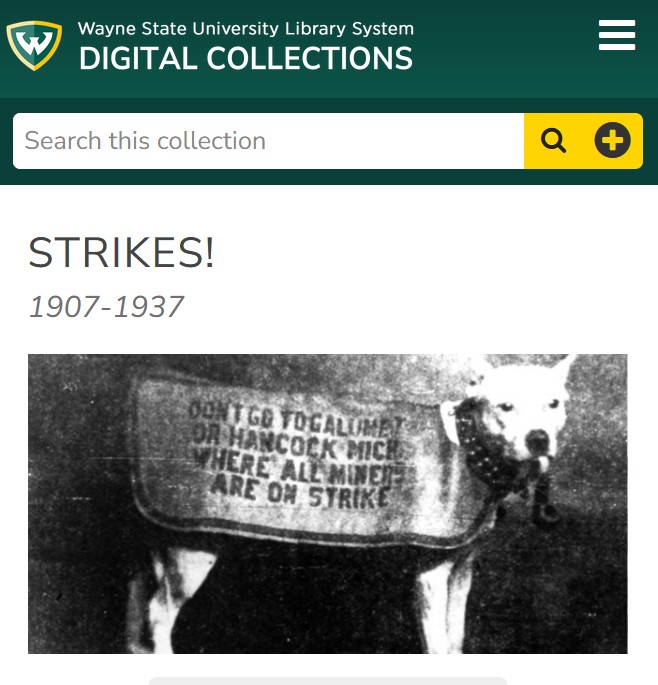
This gallery contains 62 items, early imagery of organized labor, including strikes, demonstrations, organizing efforts, and other related events. Topics include the Copper Country Strike, Loray Mills Textile Strike, Indianapolis Street Car Strikes, and Paterson Textile Strike. This image gallery has been curated by Elizabeth Clemens.
62 images from Various strikes 1907-1937
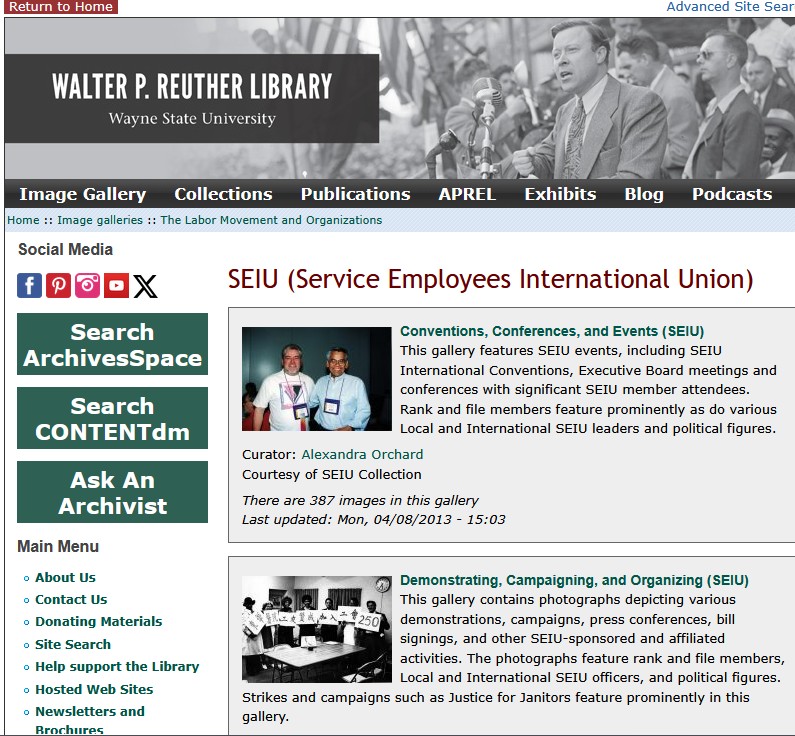
Reuther Library, Wayne State University, Utah Phillips
Utah Phillips was a well known as a folk singer, performer, storyteller, and activist. Throughout his life and career, Utah was one of the most prominent modern advocates for the Industrial Workers of the World IWW and was oftentimes compared to early Wobbly troubadour Joe Hill for his ability to convey working class messages and support for the One Big Union through his songs and performances. In addition to being a steadfast member of the IWW, Utah was also involved in more general labor activism and organizing, peace and anti-war activism, environmental activism, advocacy for hoboes and the homeless, and other political and social causes.
twenty-five images from the Utah Phillips Papers, the Ohio-born IWW activist and entertainer who built a career on music, labor organizing, and advocacy for the poor, homeless, and others.
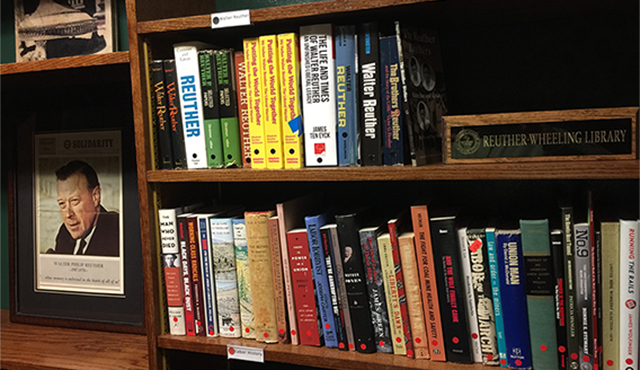
Reuther Wheeling Library
Reuther-Wheeling Library and Labor History Archive was founded as a research and study center on the life, times, and thought of Wheeling’s native son, labor leader and human rights activist, Walter P. Reuther. The library contains numerous titles related to economics, politics, labor history, social justice, human rights, education, and the environment. The library also contains a unique collection of books written by local authors, or about the heritage, history, and culture of the City of Wheeling, the Upper Ohio Valley Region, the State of West Virginia, and the Appalachian Region.
The Reuther-Wheeling Library is maintained by the WALS Foundation and is located in the State Cellar of the First Capitol Building.
Reuther-Wheeling Library and Labor History Archive was founded as a research and study center on the life, times, and thought of Wheeling’s native son, labor leader and human rights activist, Walter P. Reuther.

Rev. John McDowell
A 1902 description of a coal miner's life, written by Rev. John McDowell; accompanied by several photographs and images of coal mining that were not originally published with McDowell's article.
(teaching document) "The slow progress of the boy who starts in a breaker, and ends, an old man in the breaker - as told by a man who was once a miner."
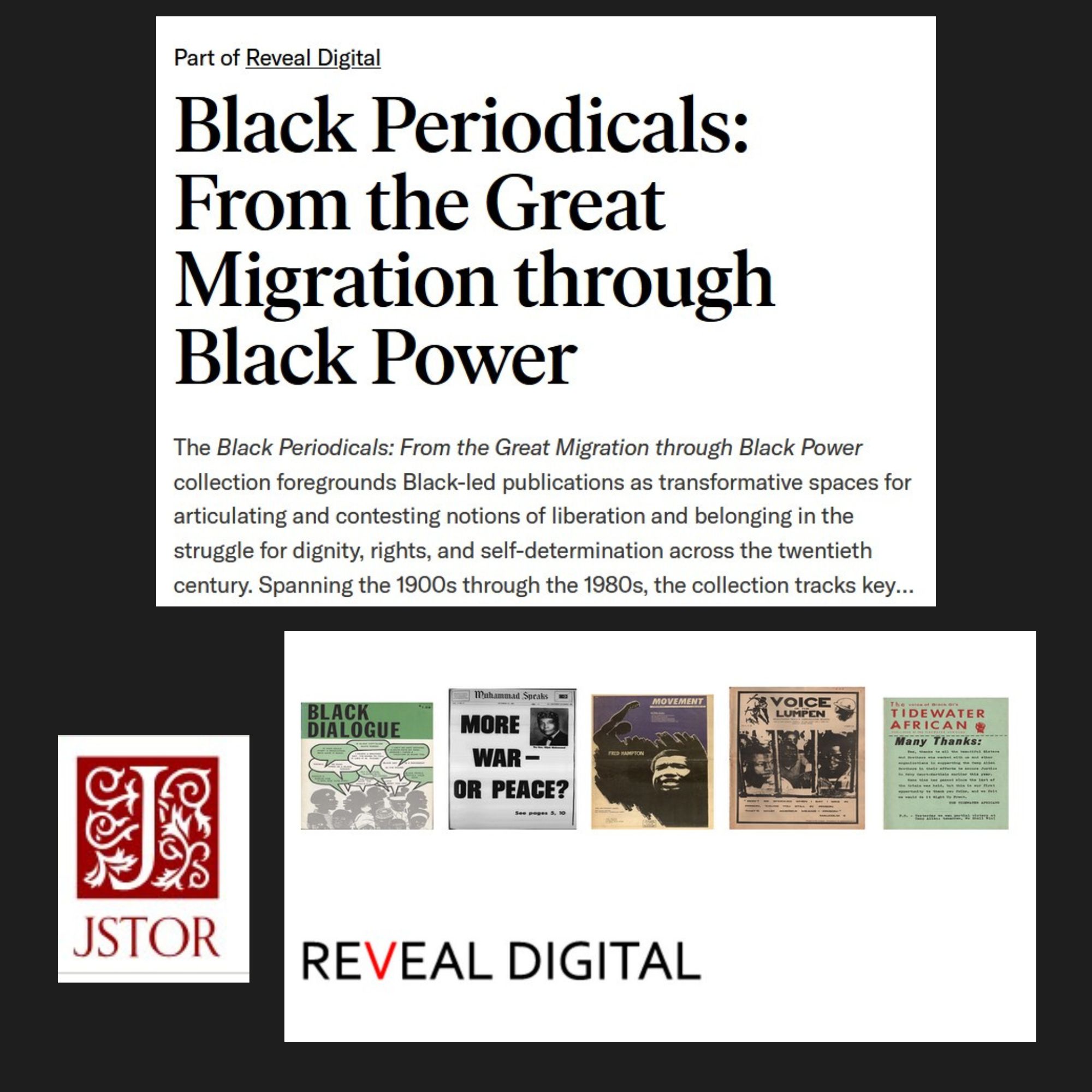
Reveal Digital, JSTOR
Black Periodicals: From The Great Migration through Black Power, the final collection for Diversity & Dissent, will include periodicals that depict the various political, literary, and cultural forms that Black Americans used to advance their vision in the ongoing struggle for liberation and dignity. Magazines and newsletters from women’s organizations, religious groups, labor organizations, and more reveal a diversity of ideological orientations, strategic methods, and aesthetic modes among Black voices throughout the mid-twentieth century. This collection will also include select titles from Europe, Africa, and the Caribbean that reflect the global dimensions of the Black freedom struggle, and will pay particular attention to publications originating in the early 20th century and interwar era, foregrounding connections between this period and the Civil Rights movement and beyond.
Scope:
While the majority of the included periodicals, which will total 75,000 pages upon completion, will be drawn from the era around the Black Power movement of the late 1960s-1970s, the collection will aim to add other featured clusters
Newsletters from organizations of Black women, exemplified by such groups as the National Council of Negro Women and the Third World Women’s Alliance, and local women’s service clubs. These types of organizations published newsletters to broadcast their work and mobilize communities for their cause.
Periodicals representing the advocacy work of Black organizations that sought to educate, inform, and promote specific causes, such as opportunities for Black people in the South or the release of political prisoners. Particular attention will be paid to those periodicals in this category that had women editors or key contributors.
Periodicals from labor organizations, demonstrating the organizing by Black workers in various industries, such as autoworkers and railroad workers, as well as publications from Black agricultural institutions, published contemporaneously to the beginnings of the U.S. labor movement of the 1930s.
Newsletters from organizations of Black women, exemplified by such groups as the National Council of Negro Women and the Third World Women’s Alliance, and local women’s service clubs. These types of organizations published newsletters to broadcast their work and mobilize communities for their cause.
Periodicals representing the advocacy work of Black organizations that sought to educate, inform, and promote specific causes, such as opportunities for Black people in the South or the release of political prisoners. Particular attention will be paid to those periodicals in this category that had women editors or key contributors.
Periodicals from labor organizations, demonstrating the organizing by Black workers in various industries, such as autoworkers and railroad workers, as well as publications from Black agricultural institutions, published contemporaneously to the beginnings of the U.S. labor movement of the 1930s.
Research and descriptive text for this collection was contributed by Timnet Gedar.
Newsletters from organizations of Black women, exemplified by such groups as the National Council of Negro Women and the Third World Women’s Alliance, and local women’s service clubs. These types of organizations published newsletters to broadcast their work and mobilize communities for their cause.
Periodicals representing the advocacy work of Black organizations that sought to educate, inform, and promote specific causes, such as opportunities for Black people in the South or the release of political prisoners. Particular attention will be paid to those periodicals in this category that had women editors or key contributors.
Periodicals from labor organizations, demonstrating the organizing by Black workers in various industries, such as autoworkers and railroad workers, as well as publications from Black agricultural institutions, published contemporaneously to the beginnings of the U.S. labor movement of the 1930s.
Research and descriptive text for this collection was contributed by Timnet Gedar.
Newsletters from organizations of Black women, exemplified by such groups as the National Council of Negro Women and the Third World Women’s Alliance, and local women’s service clubs. These types of organizations published newsletters to broadcast their work and mobilize communities for their cause.
Periodicals representing the advocacy work of Black organizations that sought to educate, inform, and promote specific causes, such as opportunities for Black people in the South or the release of political prisoners. Particular attention will be paid to those periodicals in this category that had women editors or key contributors.
Periodicals from labor organizations, demonstrating the organizing by Black workers in various industries, such as autoworkers and railroad workers, as well as publications from Black agricultural institutions, published contemporaneously to the beginnings of the U.S. labor movement of the 1930s.
Research and descriptive text for this collection was contributed by Timnet Gedar.
75,000 pages of black periodicals
Rhode Island Labor History Society
The Rhode Island Labor History Society provides resources to the public to educate the Ocean State on our shared history as workers.
This site is intended to be a resource to those who share a love of Labor History. Academics, unionists, historians, and workers of the world are all welcome.
In 1982, we established a labor archive at the Rhode Island Historical Society’s Library, one of the oldest repositories of its kind in the United States. The library and its archives are located at 121 Hope Street in Providence.
Many of our members, in their capacity as workers, scholars, and history buffs, have written books and essays on a variety of labor topics covering both local and national areas of interest.
The Rhode Island Labor History Society provides resources to the public to educate the Ocean State on our shared history as workers.
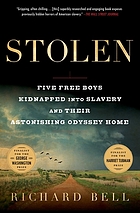
Richard Bell
Philadelphia, 1825. Five young, free black boys are lured onto a small ship with the promise of food and pay. They are instead met with blindfolds, ropes, and knives. Over four long months, their kidnappers drive them overland into the Cotton Kingdom to be sold as slaves. Determined to resist, the boys form a tight brotherhood as they struggle to free themselves and find their way home. Their ordeal shines a spotlight on the Reverse Underground Railroad, a black market network of human traffickers and slave traders who stole away thousands of legally free African Americans from their families in order to fuel slavery's rapid expansion in the decades before the Civil War. -- Adapted from jacket
a spotlight on the Reverse Underground Railroad, a black market network of human traffickers and slave trader
Richard Hakluyt
Shorter synopsis of 300 page work here is at https://nationalhumanitiescenter.org/pds/amerbegin/exploration/text5/hakluyt.pdf
Through what many in England regarded as a creative proposal in “Western Planting,” Hakluyt writes to convince the Crown to back colonization efforts in America to relieve England of costs associated with its over-populated underclass.
Hakluyt’s proposes shipping the underclass out using one-way tickets to populate risky, dangerous colonial settlements. Hakluyt’s own words: “thousandes of idle persons in this realm” who “stuff” our prisons full, “where either they pitifully pyne awaye, or els at lengthe are miserably hanged,” could be put to honest labor as indentured workers.
English writer Richard Hakluyt's work supporting the English colonization of North America
Richard Joyce
Although prior to the 1860s, some mining was done in the region south of Joliet, Ill., those early mines were primarily small affairs that supplied local needs. The coal mining "boom" in the northern fields of Illinois really dates from 1864. Around the town of Braidwood, a farmer struck coal while drilling a well for water. For the next 50 years, thousands of people came into Will, Grundy, and Kankakee Counties to seek their livelihood in the coal mines.
An account of issues, events, and personalities associated with coal mining in the latter part of the 19th century to early 20th.
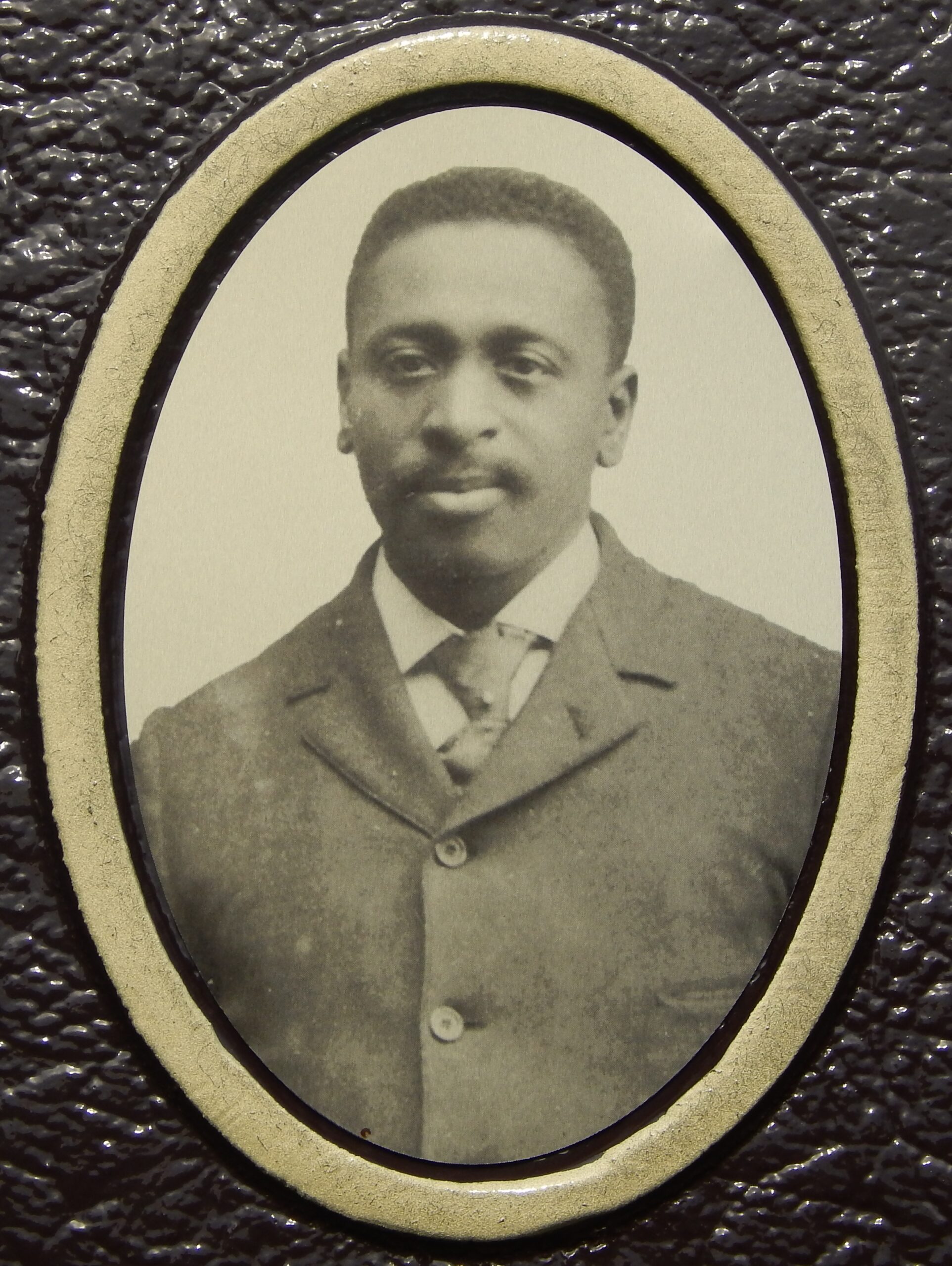
Richard L. Davis, History Matters
In this series of six letters submitted in 1891 to the National Labor Tribune, Davis reflected on the larger meaning and purpose of interracial unionism in an era of rising racial tensions and institutionalized discrimination. A series of exchanges on the status and position of Black miners in UMWA. In this February 1891 letter to the National Labor Tribune, R. L. Davis reported the decision by some of his fellow Hocking Valley Black Ministers to form a separate organization following the alleged denial of equal access to the diminishing number of jobs in the field. Davis, both as a black miner and a UMWA official, had agreed to investigate the charges of discrimination against black miners. In a letter dated February 3, 1891, Davis notes that he had found no evidence to support the charges. Nevertheless, Davis used the opportunity to attack racial discrimination as destructive of the basic union impulse.
Richard L. Davis, the most important black leader of Ohio’s miners, was called upon frequently in the 1880s and 1890s to serve as a spokesman for the many black miners in his home state, as well as the thousands more who labored in Alabama, Tennessee, and West Virginia. He was also called upon to serve as an intermediary between black rank-and-file miners and the white majority and white national leadership of the United Mine Workers of America (UMWA), dealing with such issues as black participation in the union, strike breaking by African Americans, and the racist attitudes of many rank-and-file white miners toward African Americans. (Davis was twice elected to the UMWA’s executive board.)
(teaching document) A series of six letters written by Richard L. Davis to the National Labor Tribune, where he ponders the issues of interracial unionism, race relations, and institutionalized racism.
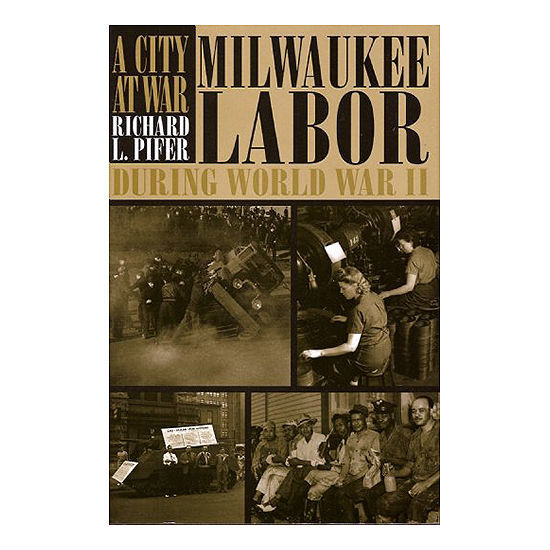
Richard L. Pifer
A City at War focuses on the experiences of working men and women in a community that was not a wartime boomtown. Because Milwaukee was a community of established factories and neighborhoods and its workers were aware of the city's labor past, the sacrifices of wartime did not blind them to a vision of a future security. As wartime wages failed to keep pace with inflation, workers and unions worried about maintaining jobs and earning power in a postwar world. As managers and companies profited from the war, they worried about controlling production costs and meeting the challenges of postwar competitors. At a time when the United States is at war, A City at War provides readers with a complex view of the home front and the way Americans responded to the most significant war of the twentieth century.
a complex view of the home front labor scene during World War II in Milwaukee, Wisconsin
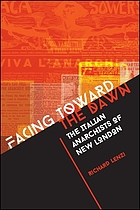
Richard Lenzi
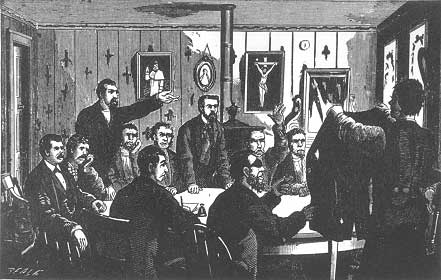
Facing toward the Dawn is a history of the Italian American anarchist movement that existed in the Fort Trumbull neighborhood of New London, Connecticut, for seventy years. The Italian American radical movement thrived into the 1920s in industrial cities throughout the country. Connecticut possessed a vibrant movement, and New London's anarchists stood at the forefront of this activity. Based upon immigrants from the Marche region of Italy, especially the city of Fano, the Fort Trumbull anarchist groups maintained a strong, stable presence in the neighborhood for decades. Beginning as a circle within the ideological camp of Errico Malatesta, the New London Marchegian anarchists evolved into one of the core groupings within the wing of the movement supporting Luigi Galleani. They conducted manifold activities, from propaganda to involvement in the labor movement, fought fascists in the streets, held countless social events such as festas, theatrical performances, picnics and dances, and hosted militant speakers such as Emma Goldman. Above all, they established what could be called a "solidarity" subculture upon which the longevity of their group was based. This study is a micro-history of an ethnic radical group in a New England city during the heyday of labor radicalism in the United States, and written in the context of developing trends within the larger radical movement, the Italian American community, and greater American society as it moved from the Gilded Age to the New Deal and beyond"-- Provided by publisher
a history of the Italian American anarchist movement that existed in the Fort Trumbull neighborhood of New London, Connecticut, for seventy years.
Richard O. Boyer, Herbert M. Morais
When Franklin B. Gowen, once known as the King of the Reading Valley in Southeastern Pennsylvania, committed suicide in a lonely Washington hotel room in 1889 it was suggested by some that perhaps his brilliance had verged on insanity throughout his dramatic career. Others said he had taken his life when he felt his powerful but erratic brain losing its grip on reality. It was hinted then, as men discussed his solitary ending, that he had been near insanity even as his fevered eloquence sent nineteen Pennsylvania union miners to their deaths
excerpt introduces the Mollie Maguires to students or unfamiliar readers
Richard Oestreicher, Pitt Digital
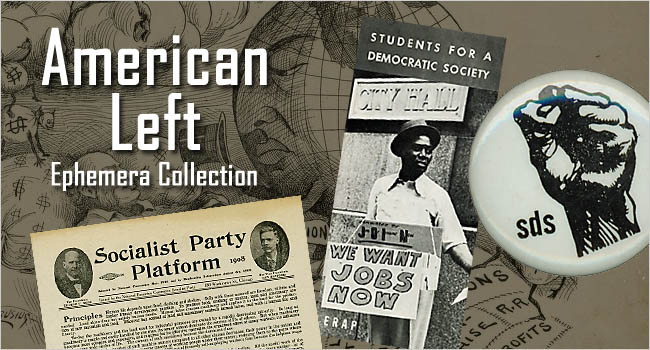
American Left Ephemera Collection--original source material from the personal collection of ephemera accumulated over a 35-year period by Dr. Richard J. Oestreicher, Associate Professor of History at the University of Pittsburgh. The collection emphasizes ephemeral items (i.e., made for one time or brief usage and then likely to be discarded) from the 1890s to the present and includes periodicals, photographs, letters, pamphlets, books, posters, flyers, labels, pins and other objects.
While the majority of these items were produced by the Socialist Party USA (SPUSA), Communist Party USA (CPUSA), Students for a Democratic Society (SDS), or organizations linked to them, the collection also includes material from a wide variety of other organizations and movements as well as from unaffiliated activists and radical intellectuals. The collection now resides at the University's Archives & Special Collections.African Americans and the Left
Sections of the exhibit:
I. African Americans and the Left
This series focuses on the role African Americans played in leftist movements and on left wing support for campaigns against racist practices and for Black civil rights, including the major role Communism played in the Civil Rights Movement before the 1950s, and influence of Black Liberation on the New Left. While the Socialist Party gave nominal rhetorical support to racial equality, most Socialist Party leaders considered racial discrimination (or gender, ethnic, or religious discrimination) as distinctly secondary to the class struggle, and a significant minority within the Party harbored racist views. Blacks folks suffered, SP leaders argued, primarily because their labor was exploited and that would only be solved by socialism.
Anarchists
Several waves of anarchists participated in left-wing movements in the U.S., sometimes in tension with the Marxists who led the SPUSA, the CPUSA, and other left-wing organizations. From the late 1800s through the 1930s anarcho-communists predominated in anarchist circles. Like Marxists they considered private capital ownership inherently exploitative, but since they considered all authority illegitimate they criticized Marxists’ commitment to state ownership of the means of production. Other tendencies including syndicalism, communitarianism, and individualist libertarianism also influenced anarchist thought and practice.
Anti-War Propaganda
Four waves of peace and antiwar activity played major roles within the twentieth century American Left. First Socialists before and during WW1 opposed military preparation and American participation in the war after 1917. In the 1930s revulsion against the memory of WW1 and fear that the world was drifting towards an even more devastating world war fueled large scale antiwar and peace agitation. Antiwar activity overlapped with antifascism (as in the title of one of the largest organizations—The League Against War and Fascism) because activists perceived the militarized fascist right as the primary source of war threats. College students played a key role in the movement circulating mass petitions urging draft refusal and staging several one day national strikes for peace.
Christian Socialism
Both the Marxist and anarchist traditions usually opposed religion because they conceived of rationalism as the only path to human liberation. Religion, they argued, befuddled the masses in two ways. First, by basing itself on the supernatural, religion encouraged irrational thinking and discouraged the masses from developing rational capacities. Second, by promising rewards in a future life for dutiful behavior in this life, religion encouraged passivity and discouraged protest. However, these arguments ignored how radical social movements had been inspired by egalitarian elements in Judeo-Christian theology from the peasant wars of the late Middle Ages and early Renaissance mobilized by dissenting Protestants and heretical Catholics to the radical wing of the English civil war inspired by radical Christian sects to the abolitionist movement in which evangelical Christians had played an overwhelming role.
Citizens Party
Dissatisfaction with the Carter administration led a diverse array of activists to form the Citizen’s Party in 1980 around a program combining environmentalism with calls for “economic democracy.” The party nominated environmentalist Barry Commoner for president. Commoner’s candidacy initially attracted both press coverage and endorsements by several prominent labor leaders and liberal Democratic elected officials, but the campaign was not well-organized and many initial supporters ending up voting for Carter out of fear of a Reagan victory. Commoner received only 221,000 votes. A handful of party candidates won local offices in 1980 and after, but the 1984 Citizen’s Party presidential candidate, Sonia Johnson, received less than a third of Commoner’s total (72,000) and the party disbanded. In Pennsylvania the Citizen’s Party achieved ballot status in the Consumer Party’s (a previously existing Philadelphia based) third party line.
VI. Communists and Civil Liberties
Communists and their supporters issued most of the items in this section during the period following World War II when the Federal Government, several state governments, and numerous private organizations began systematic surveillance, prosecution, and harassment of Communist Party members, close fellow travelers, and former Communists suspected of still harboring sympathy for communism. While many observers call this the McCarthy Era, after Wisconsin Senator Joseph McCarthy who garnered substantial publicity for his speeches asserting the threat of a Communist conspiracy within the Federal government, the repression began well before McCarthy’s first major speech on the question in 1950 and continued well after his censure for procedural excesses in 1954.
Communist Party USA (CPUSA)
VI. Communist Party USA (CPUSA)
The Communist Party U.S.A., successor to the multiple left-wing factions that split off from the Socialist Party U.S.A. at its 1919 convention, did not develop significant influence until the mid-1930s. While they initially commanded at least nominal support of perhaps 70,000 of the SPUSA’s 110,000 members, that support drifted away as the rival Communist factions operated as secret undergrounds and refused to cooperate. The Comintern pressured them to combine into as an open political party, the Workers Party of America, in 1922, but they maintained a dual underground structure for several years thereafter, and continued factional squabbles. Ultimately the Party only achieved working unity between 1927 and 1929 by expelling the significant portions of the leadership who identified with Stalin’s factional rivals in the Soviet Party. The Party, thus, entered the Depression unified but isolated with a membership not much bigger than 10% of the combined membership of the 1919 Communist factions. Their dependence on Soviet intervention to settle disputes shaped the Party’s subsequent political culture. While all Communist Parties had to adhere to Comintern policy as a condition of membership, the CPUSA usually maintained less independence from Soviet direction than many other Communist parties.
Ethnic Radicalism
VIII. Ethnic Radicalism
Immigrant radicals carried left wing politics to the U.S. in their cultural baggage. They settled in American ethnic communities and continuing organizing and agitating, gaining traction among fellow ethnics for two reasons. First, many immigrants still followed old country politics both for emotional reasons and because they frequently intended to return home after a sojourn in America. Especially for immigrants from countries where the Left expanded rapidly in the late 19th and early 20th centuries, the strength of left-wing organizations in their homelands gave left-wing politics credibility despite the weaknesses of the Left in the U.S. Second, ethnic discrimination and deplorable living and working conditions disillusioned and radicalized some immigrant who had come to the U.S. with grandiose expectations of their prospects in Golden America.
Feminism, Gay and Lesbian
IX. Feminism, Gay and Lesbian
The sexual and gender politics of leaders of the Old Left generally did not stray very far from conventional bourgeois norms, but their movements nonetheless offered political space for feminists and radical critics of the gender system. The dominant position within both the SPUSA and the CPUSA viewed the “Women Question” as a special case of the Class Question. Capitalism fostered discrimination against women as a way of maintaining a subservient reserve army of labor that could be used to divide workers and lower wages. Only socialism would solve the Women Question. Both parties officially supported equal rights for women and opposed gender discrimination, but top leaders rarely gave these issues priority.
Labor
X. Labor
The SPUSA and the CPUSA, like virtually all left-wing organizations that considered themselves Marxist, described themselves as parties of the working class although significant portions of their membership were intellectuals, professionals, small business owners and farmers. Indeed, Trotsky, during his brief sojourn in NYC before the Bolshevik Revolution, is alleged to have described the American Socialist Party as a party of dentists and lawyers.
Leftist Organizations Thought in Relation to the Rest of the World and U.S. Economics/Imperialism
XI. Leftist Organizations Thought in Relation to the Rest of the World and U.S. Economics/Imperialism
Although they organized nationally based political parties, all of the Marxist parties considered themselves internationalists rather than nationalists. The SPUSA expressed this internationalism through its affiliation with the Socialist Second International. For the CPUSA its affiliation with the Communist Third International was even more fundamental to Party identity because the Comintern functioned in part as a franchising organization. The right of revolutionary activists anywhere in the world to call themselves Communist was contingent on their willingness to follow the discipline and policies of the Comintern. Therefore, not surprisingly both the SPUSA and the CPUSA paid close attention to events in many parts of the world and frequently circulated radical publications and pamphlets from other countries. Although New left organizations did not formally affiliate with bodies like the Second and Third Internationals, because the Vietnam War and more broadly Third World Revolution fundamentally shaped the New Left, New Left publications also addressed a wide range of international concerns and global issues.
New Left Organizations
XII. New Left Organizations
In contrast to the Old Left, the New Left did not feature tightly knit organizations with bureaucratic structures, disciplined policy formation, strategic planning, or even something as simple as formal membership lists. Instead “the Movement,” as participants frequently called it, consisted of a wildly fluctuating body of free-floating activists united by a common political style and sensibility. This section of the American Left Ephemera collection includes ephemera produced by a broad range of single issue organizations, short-lived local organizing committees, ad hoc groups, and underground newspapers. Also included here are publications of the Radical Education Project, a New Left publishing cooperative—loosely affiliated with SDS-- located in Ann Arbor and later Detroit, Michigan; and portions of the National Guardian, an Old Left newspaper founded by fellow travelers in 1948 that made a transition to New Left orientation in the 1960s.
Other Radical/Leftist Organizations
XIII. Other Radical/Leftist Organizations
Basically this section of the collection is catch all for a variety of material does not fit obviously into other categories or includes too few items to merit an entire section of its own.
Lovestoneites
In 1929 the CPUSA expelled former Party General Secretary Jay Lovestone and a substantial group of followers including Benjamin Gitlow, the CP’S 1924 and 1928 VP candidate. The Lovestone group supported the Soviet faction aligned with Nicholai Bukharin and opposed Comintern Third Period polices which they considered (correctly) sectarian and impractical. Initially the Lovestone group considered itself a loyal opposition to the officially recognized leadership of the CPUSA, but gradually developed a separate organizational identity. Although the group’s membership never exceeded a few hundred, it had more influence than might be expected both because officials in several unions respected the advice of prominent Lovestoneites and because the group included several important public intellectuals. Lovestone went on to a career as an activist against Communist influence in the labor movement, both domestic and foreign, and an advisor to portions of the U.S. national security apparatus concerned about that issue.
Popular Front Culture
XIV. Popular Front Culture
The Popular Front grew out of the mutual recognition of Communists and non-Communist leftists in the mid-1930s that they needed to join forces against the threat of fascism. Formalization of this recognition included the 1935 shift in the Comintern line from Third Period policies that had mandated that Communists attack others on the Left as “social fascists” to Popular Front policies for a united front of the Left, and the electoral alliances that led to victories in 1936 elections in France and Spain.
Progressive Party
XV. Progressive Party
Former Vice President Henry Wallace ran for President on a third party Progressive ticket in 1948. The Progressive Party emphasized three themes: opposition to Cold War policies, expansion of New Deal reform towards something closer to European social democracy, and racial equality. Serious discussion of a possible left third party began in 1946. In its earliest stages this movement drew support from a broad array of New Dealers, officials and activists in state third parties such as the New York American Labor Party, the Minnesota Farmer Labor Party, or the Washington Commonwealth Federation (more of a faction in the Washington State Democratic Party than a third party), CIO officials, and left-wing intellectuals.
Socialist Labor Party (SLP)
XVI. Socialist Labor Party (SLP)
The Socialist Labor Party began in 1876 as the Workingmen’s Party of the United States, renamed the Socialistic Labor Party in 1877. A tiny remnant survives today.
Its only notable successes occurred in the years immediately after the 1877 railroad strike near the end of the bitter 1870s depression. The railroad strike had been as much a popular insurrection as a conventional strike. Fueled both by the anger that had provoked this insurrection and the sense of empowerment that it had kindled, significant numbers of U.S. workers turned to third party protest voting between 1877 and 1880. Most of those protest votes went to the Greenback-Labor Party, but the SLP drew substantial votes and elected local officials and state legislators in many Midwestern cities with substantial German immigrant populations.
Socialist Party USA (SPUSA)
XVII. Socialist Party USA (SPUSA)
Founded in 1901 by disgruntled members of the Socialist Labor Party and other Socialist factions, the party became the most electorally successful left-wing party in US history. It reached a peak membership of almost 120,000 in 1912 and again in 1919, and drew about 3% of the national popular vote in the elections of 1904, 1908, 1916, and 1920 and 6% in 1912. During these years the Party elected congressmen from New York City and Milwaukee, several dozen state legislators and perhaps as many as a thousand local officials including mayors of such major cities as Milwaukee and Minneapolis.
Socialist Worker's Party (SWP)
XVIII. Socialist Worker's Party (SWP)
In 1928 the CPUSA expelled American Communists sympathetic to Leon Trotsky and his faction battling Joseph Stalin for control of the international Communist movement. They reconstituted themselves as the Communist League of America. Although a tiny group, estimated at perhaps 100 members, it included several prominent founders of American Communism (e.g. James Cannon) and some talented and energetic organizers. The group made contact with Trotsky sympathizers in other countries, established a journal, The Militant, and pursued an energetic propaganda campaign that led to modest expansion.
Students for a Democratic Society (SDS)
XIX. Students for a Democratic Society (SDS)
SDS began as the student affiliate of the League for Industrial Democracy (LID), an organization of Fabian minded Socialist intellectuals and labor union officials that published detailed policy statements on public issues from a Social Democratic point of view. The LID sponsored a Student League for Industrial Democracy (SLID) that had substantial membership at several colleges and universities in the Debs era, but by the late 1950s both the parent organization and the student wing had declined to tiny remnants. However, the student wing had picked up energetic organizers influenced by the emerging New Left. In 1960 they rename the organization Students for a Democratic Society, suggesting how they had been influenced by such New Left oriented thinkers as C. Wright Mills. Mills criticized what he called the “labor metaphysic” of the Old Left and urged young activists to pursue new ideas and new strategies. This began a process of estrangement from the parent organization over such issues as anti-communism and the Vietnam War. The ILD was militantly anti-Communist and supported U.S. policy in Vietnam. Most SDS members had scorn for Communism (at least of the capital "C" variety; some of them could reasonably be called small "c" communists), but they were anti-anti-Communist because they considered American anti-Communism as a paranoid crusade stifling creative thinking in the United States. SDS vigorously opposed U.S. policy in Vietnam. SDS did not formally break with the LID until 1965, but the mutual antagonism between the LID and SDS was quite evident several years before.
Student Peace Union (SPU)
XX. Student Peace Union (SPU)
The Student Peace Union (SPU), founded in 1959, initially focused on nuclear disarmament but expanded to a broader range of peace issues including opposition to the war in Vietnam. Before the expansion of SDS in the mid-1960s the SPU was the largest organization of New left college students with a peak membership of perhaps 5,000. The organization was eclipsed by a combination of internal factional disputes and the rapid expansion of SDS after 1964. Most of the SPU material in the American Left Ephemera Collection came from the papers of a Philadelphia activist, Tom Barton.
Utopian Socialism
XXI. Utopian Socialism
Since the 1820s small groups of socialist and anarchist reformers and revolutionaries had established model communities as essentially arguments by example. They hoped that the success of such communities would inspire others and silence critics who argued that communal or collective modes of social organization were contrary to human nature. Most failed in five years of less, but this did not dissuade later enthusiasts from trying again. The Llano Colony included among its sponsors prominent California Socialists including Job Harriman, the 1900 Socialist vice presidential candidate and 1911 Socialist Los Angeles mayoral candidate. After several years in Southern California, the group sold its California property and relocated to Louisiana where it survived longer than most such efforts. The counterculture of the late 1960s spawned a new wave of rural communes but few lasted any longer than those of earlier generations.
Vietnam War
XXII. Vietnam War
Vietnamese Communists initiated armed struggle against the French colonialists in 1929. Although largely driven underground during the 1930s, they maintained armed militias that began to fight the Japanese military after the 1940 Japanese occupation. These became the seed for the army of the Viet Minh, The League for the Independence of Viet Nam, a Communist led organization that incorporated other nationalists. The Viet Minh did not attempt large scale engagements against the Japanese army but did have de facto control of parts of the countryside by 1945 when they staged an uprising in Hanoi a few weeks after the Japanese surrender in World War II. They declared a provisional government of the Democratic Republic of Vietnam.
items were produced by the Socialist Party USA (SPUSA), Communist Party USA (CPUSA), Students for a Democratic Society (SDS),
Richard Oestricher, Pitt Digital
Dr. Richard Oestreicher, Associate Professor of History at the University of Pittsburgh, amassed the American Left Ephemera Collection over a 35-year period to document the history of the American Left from the 1890s to the present. The collection includes items from the 1890s to the present including periodicals, photographs, letters, pamphlets, books, posters, flyers, labels, pins and other objects, but it emphasizes ephemeral items (e.g., items made for one time or brief usage and then likely to be discarded). While the majority of these items were produced by the Socialist Party USA (SPUSA), Communist Party USA (CPUSA), Students for a Democratic Society (SDS), or organizations linked to them, the collection also includes material from a wide variety of other organizations and movements as well as from unaffiliated activists and radical intellectuals.
About the American Left
Left and Right as political designations date to the French Revolution when the Jacobins sat on the left in the National Assembly and the Girondins on the right. The Left has come to mean movements, organizations, and intellectual or cultural tendencies that emphasize an egalitarian ethos, a utopian vision of social reconstruction, and a commitment to agitation and action to advance that ethos and vision.
Only three left-wing organizations have attained mass followings in the twentieth-century U.S.: the Socialist Party of the U.S. (SPUSA), the Communist Party of the U.S. (CPUSA), and the Students for a Democratic Society (SDS). Founded 1901 with remnants still in existence today, SPUSA reached a peak membership of about 120,000 around the 1912 election when it polled 6% of the presidential vote. The party declined sharply after 1919 from a combination of government repression, a split between reformists and revolutionaries crystallized by the Bolshevik revolution, and the effects of social change on their core constituencies and on the credibility of their hopes for imminent change.
CPUSA, formed out of an amalgamation of revolutionary factions from the 1919 split in the Socialist Party, reached a membership of roughly 75,000 (with a pool of close sympathizers, "fellow travelers," perhaps five to ten times larger than the membership) at the end of the 1930s and again during WWII. CPUSA declined very rapidly after the war under the impact of the Cold War, disillusionment with the Soviet Union, postwar prosperity, and the Party's dogmatic and sectarian tendencies.
SDS began as the student wing of the League for Industrial Democracy (originally an organization of socialist college students that evolved into a social-democratic policy group of intellectuals and union functionaries). They parted company with the parent organization over Vietnam and anticommunism in the early 1960s, and expanded rapidly during the 1960s as the most visible American exponents of the New Left. In contrast to the old Left parties, SDS did not collect monthly dues or keep systematic membership records, so estimates of its membership vary widely, but at its peak in 1968-69 probably several hundred thousand people identified themselves at least loosely with SDS.
Although each of these organizations briefly functioned as a mass movement, none sustained substantial organization for much more than a decade. Nonetheless, they had decisive impact on modern American history. Left-wing activists played crucial roles in virtually every progressive social movement in twentieth-century America: labor organization, civil rights and black liberation, antiwar and peace movements, feminism, gay rights, environmentalism, and anti-globalism. They shaped terms of debate in American political culture and forced mainstream politicians to respond to their arguments. Understanding the history of the Left is thus critical to understanding key themes in American history.
includes periodicals, photographs, letters, pamphlets, books, posters, flyers, labels, pins and other objects.items were produced by the Socialist Party USA (SPUSA), Communist Party USA (CPUSA), Students for a Democratic Society (SDS),
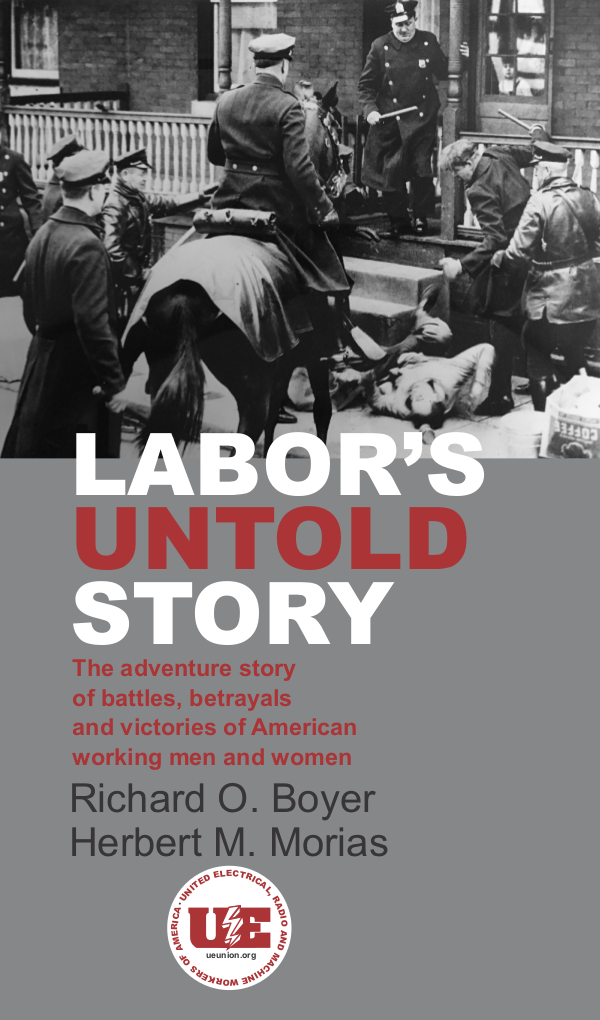
Richard Owen Boyer
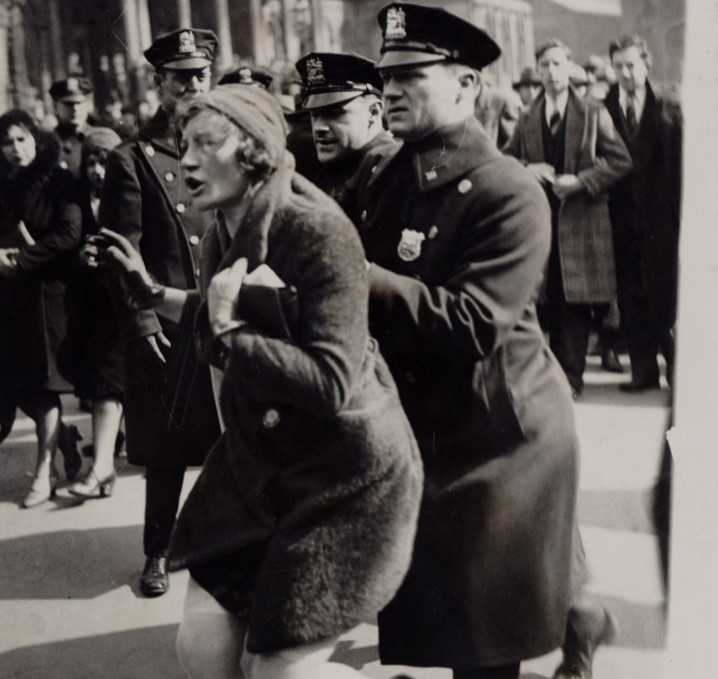
Extensively researched, yet highly readable, Labor’s Untold Story is a history of the U.S. labor movement from the Civil War through the Eisenhower Administration. Widely regarded as a classic study since it was first published in 1955, the book documents labor-management conflict from the workers’ perspective. Topics range from William Sylvis’s attempts to admit women and blacks into the labor movement to the first nationwide strike; from the Justice Department’s use of “red scare” tactics to break the great steel strike of 1919 to the “eclipse” of anti-Communist witch-hunter Senator Joseph McCarthy.The Story Behind Labor’s Untold Story
UE’s involvement with the book came right out of the union’s struggles.
Written by historian Herbert J. Morais and feature writer Richard O. Boyer, Labor’s Untold Story was originally published in 1955 by Cameron Associates. In the midst of Cold War hysteria, this working-class history represented a powerful protest against corporate brainwashing.
A second printing in 1965 by Marzani and Munsell sold quickly. Then came the 1969 national General Electric strike. Labor’s Untold Story helped supply younger members on the picket line with answers to their questions about labor struggles. As UE General Secretary James Matles told the 1970 UE Convention, “The few dog-eared copies available were at a premium as the workers and students involved in the strike gobbled them up. Little wonder! The book reads like an adventure as it tells the real history of the union movement in America.”
UE decided to take on responsibility for publishing Labor’s Untold Story to help fill the vital need for popular labor history, particularly among young workers, students, and a growing rank-and-file movement.
The UE-produced third printing in 1970 was an instant success. But even then, it’s doubtful that anyone would have predicted the enduring popularity — and constant demand for — this labor history. Yet, more than 50 years later, Labor’s Untold Story is still being told in a new issue hot off the presses, with an attractive new cover designed by retired UE cartoonist Gary Huck.
a history of the U.S. labor movement from the Civil War through the Eisenhower Administration.

Richard Phillips, History Matters
The cowboy of Western mythology rode the range during the heyday of the long cattle drives in the l860s and 1870s. Despite the individualism emphasized in myth, most cowhands were employees of Eastern and European capitalists who raised cattle as a corporate enterprise to serve a growing appetite for beef in the U.S. Cowboys were overworked hired hands who rode in freezing wind and rain or roasted in the Texas sun; searched for lost cattle; mended fences; ate monotonous and bad food; and suffered stampedes, quicksand, blizzards, floods, and drought. The work was hard, dangerous, and often lonely; pay averaged from $25 to $40 a month. Many became cowboys for lack of other job opportunities; one of every three cowboys was an African American or Mexican. In the late 1930s writers employed by the Federal Writers Project in Texas interviewed more than 400 cowboys, providing some of the only firsthand sources about late 19th-century cowboys. In this interview, cowboy Richard Phillips offered a firsthand glimpse of the hard life that awaited the men who trailed cattle to market.
A Cowboy offers a firsthand glimpse of the hard life that awaited the men who trailed cattle to market.

Richard Polenberg
wisconsin, Mexican-American, Mexican American, Latino, Latinx, Chris Plata, biography, Arkansas, Indiana, music, songs
the dark but terribly familiar side of American history as told through music

Richard Rashke, Kate Bronfenbrenner
For this edition, Rashke has added a preface and three short chapters that explore what has been released and learned about the Silkwood case since the book's original publication. Karen Silkwood, an employee of the Kerr-McGee plutonium processing plant, was killed in a car crash on her way to deliver important documents to a newspaper reporter in 1974. Silkwood was a union activist concerned about health and safety issues at the plant, and her death at age 28 was considered by many to be highly suspicious. Was it Kerr-McGee's revenge on a troublesome whistle-blower? Or was it part of a much larger conspiracy reaching from the Atomic Energy Commission to the FBI and the CIA? Richard Rashke leads us through the myriad of charges and countercharges, theories and facts, and reaches conclusions based solely on the evidence in hand. Originally published in 1981, his audiobook offers a vivid, edgy picture of the tensions that racked this country in the 1970s. Now updated, with never-before-revealed names and content, this new volume is an important historical document. Complex, fascinating characters populate this compelling insider's view of the nuclear industry. The issues it explores - whistle-blowers, worker safety, the environment, and nuclear vulnerability - have not lost relevance today, 26 years after Silkwood's white Honda Civic was found trapped in a concrete culvert near Oklahoma City. Rashke fully explores and explains what happened to the various actors in the drama, and discusses the long-term effects of the events around Silkwood's death. Karen Silkwood is recognized by many as the original "Whistler-Blower". Current events should impel every curious reader to pick up this investigation to better understand how power, politics, and greed still influence America's business interests
Silkwood was a union activist concerned about health and safety issues at the plant, and her death at age 28 was considered by many to be highly suspicious
Richard Roman
The crucible of North American neoliberal transformation is heating up, but its outcome is far from clear. Examining the clash between the corporate offensive and the forces of resistance from both pan-continental and class-struggle perspectives, the authors argue that the failure of traditional labour responses has led workers to explore new strategies of struggle, including a continental labour movement.
This expanded edition examines developments in the offensive of North American big business, especially the blitzkrieg of constitutional reforms in Mexico in 2013-14. This crisis and its implications for the North American left and labour movements are explored in greater depth. This edition also includes new material from Leo Panitch and Steve Early, as well as the original preface by Mel Watkins."--Publisher's website
failure of traditional labour responses has led workers to explore new strategies of struggle, including a continental labour movement.
Richard S. Dunn
This book reconstructs the individual lives and collective experiences of some 2,000 slaves on two plantations--Mesopotamia sugar estate in western Jamaica and Mount Airy Plantation in tidewater Virginia--during the final three generations of slavery in Jamaica and the USA. It also compares Mesopotamia with Mount Airy to demonstrate the differences between slave life in the British West Indies and slave life in the Antebellum US South. The chief difference was demographic. Mesopotamia had a continually shrinking slave population, with many more deaths than births, which was standard throughout the British Caribbean. Mount Airy had a continually expanding slave population, with many more births than deaths, which was standard throughout the Old South. At Mesopotamia the slaveholders imported their laborers from Africa, worked them to death and replaced them with new Africans, so that family life was perpetually stunted. At Mount Airy, where the slaves were all American-born, the slaveholders sold their surplus people or moved them to distant work sites, so that families were routinely broken up. On both plantations numerous individual slaves are observed in action, a mix of leaders and followers, rebels and conformists. A principal theme is slave motherhood and intergenerational family formation; another is the impact of field labor upon health and longevity. The Mesopotamia people engaged with Moravian missionaries and responded to two major Jamaican slave rebellions, while 218 of the Mount Airy people migrated to Alabama as cotton hands. The book concludes with emancipation in Jamaica and the USA. Never before have two slave communities from differing regions in America been portrayed over a long time period in such full detail"-- Provided by publisher
This book reconstructs the lives of some 2,000 slaves on two plantations during the final three generations of slavery in Jamaica and the USA.
Museum/Exhibits
Tours
Maps
Digital Projects
Organizations
Sites
Film/Video
Audio/Interview
Podcast/Program
Text/Document
Image
Graphs/Data
Timeline
Southwest
West
Midwest
Southeast
Northeast
Mexico
Canada
Global
Books
Teaching
Lectures
Digital Archives
Journals
Bibliographies
Topic Intro