


Explore thousands of items. Use clickable links under collections and library for broad categories. Search by keyword (including topic,city, state.) Limit by time period, type of item, region. See our search tips page for more assistance.
Collections
Library
Type
Region
Coverage:
-
Published:
-

Richard Phillips, History Matters
The cowboy of Western mythology rode the range during the heyday of the long cattle drives in the l860s and 1870s. Despite the individualism emphasized in myth, most cowhands were employees of Eastern and European capitalists who raised cattle as a corporate enterprise to serve a growing appetite for beef in the U.S. Cowboys were overworked hired hands who rode in freezing wind and rain or roasted in the Texas sun; searched for lost cattle; mended fences; ate monotonous and bad food; and suffered stampedes, quicksand, blizzards, floods, and drought. The work was hard, dangerous, and often lonely; pay averaged from $25 to $40 a month. Many became cowboys for lack of other job opportunities; one of every three cowboys was an African American or Mexican. In the late 1930s writers employed by the Federal Writers Project in Texas interviewed more than 400 cowboys, providing some of the only firsthand sources about late 19th-century cowboys. In this interview, cowboy Richard Phillips offered a firsthand glimpse of the hard life that awaited the men who trailed cattle to market.
A Cowboy offers a firsthand glimpse of the hard life that awaited the men who trailed cattle to market.
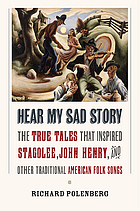
Richard Polenberg
Cornell University Press (2015)
wisconsin, Mexican-American, Mexican American, Latino, Latinx, Chris Plata, biography, Arkansas, Indiana, music, songs
the dark but terribly familiar side of American history as told through music
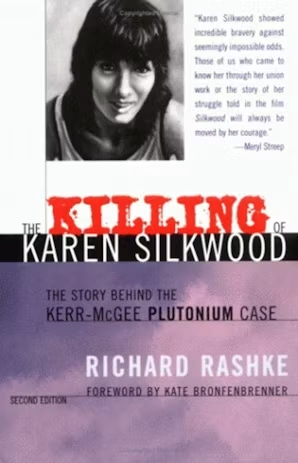
Richard Rashke, Kate Bronfenbrenner
(Updated Edition) Delphinium Books (2014)
For this edition, Rashke has added a preface and three short chapters that explore what has been released and learned about the Silkwood case since the book's original publication. Karen Silkwood, an employee of the Kerr-McGee plutonium processing plant, was killed in a car crash on her way to deliver important documents to a newspaper reporter in 1974. Silkwood was a union activist concerned about health and safety issues at the plant, and her death at age 28 was considered by many to be highly suspicious. Was it Kerr-McGee's revenge on a troublesome whistle-blower? Or was it part of a much larger conspiracy reaching from the Atomic Energy Commission to the FBI and the CIA? Richard Rashke leads us through the myriad of charges and countercharges, theories and facts, and reaches conclusions based solely on the evidence in hand. Originally published in 1981, his audiobook offers a vivid, edgy picture of the tensions that racked this country in the 1970s. Now updated, with never-before-revealed names and content, this new volume is an important historical document. Complex, fascinating characters populate this compelling insider's view of the nuclear industry. The issues it explores - whistle-blowers, worker safety, the environment, and nuclear vulnerability - have not lost relevance today, 26 years after Silkwood's white Honda Civic was found trapped in a concrete culvert near Oklahoma City. Rashke fully explores and explains what happened to the various actors in the drama, and discusses the long-term effects of the events around Silkwood's death. Karen Silkwood is recognized by many as the original "Whistler-Blower". Current events should impel every curious reader to pick up this investigation to better understand how power, politics, and greed still influence America's business interests
Silkwood was a union activist concerned about health and safety issues at the plant, and her death at age 28 was considered by many to be highly suspicious
Richard Roman
Fernwood Publishing (2013)
The crucible of North American neoliberal transformation is heating up, but its outcome is far from clear. Examining the clash between the corporate offensive and the forces of resistance from both pan-continental and class-struggle perspectives, the authors argue that the failure of traditional labour responses has led workers to explore new strategies of struggle, including a continental labour movement.
This expanded edition examines developments in the offensive of North American big business, especially the blitzkrieg of constitutional reforms in Mexico in 2013-14. This crisis and its implications for the North American left and labour movements are explored in greater depth. This edition also includes new material from Leo Panitch and Steve Early, as well as the original preface by Mel Watkins."--Publisher's website
failure of traditional labour responses has led workers to explore new strategies of struggle, including a continental labour movement.
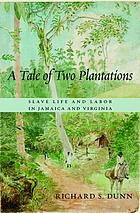
Richard S. Dunn
Harvard University Press (2014)
This book reconstructs the individual lives and collective experiences of some 2,000 slaves on two plantations--Mesopotamia sugar estate in western Jamaica and Mount Airy Plantation in tidewater Virginia--during the final three generations of slavery in Jamaica and the USA. It also compares Mesopotamia with Mount Airy to demonstrate the differences between slave life in the British West Indies and slave life in the Antebellum US South. The chief difference was demographic. Mesopotamia had a continually shrinking slave population, with many more deaths than births, which was standard throughout the British Caribbean. Mount Airy had a continually expanding slave population, with many more births than deaths, which was standard throughout the Old South. At Mesopotamia the slaveholders imported their laborers from Africa, worked them to death and replaced them with new Africans, so that family life was perpetually stunted. At Mount Airy, where the slaves were all American-born, the slaveholders sold their surplus people or moved them to distant work sites, so that families were routinely broken up. On both plantations numerous individual slaves are observed in action, a mix of leaders and followers, rebels and conformists. A principal theme is slave motherhood and intergenerational family formation; another is the impact of field labor upon health and longevity. The Mesopotamia people engaged with Moravian missionaries and responded to two major Jamaican slave rebellions, while 218 of the Mount Airy people migrated to Alabama as cotton hands. The book concludes with emancipation in Jamaica and the USA. Never before have two slave communities from differing regions in America been portrayed over a long time period in such full detail"-- Provided by publisher
This book reconstructs the lives of some 2,000 slaves on two plantations during the final three generations of slavery in Jamaica and the USA.
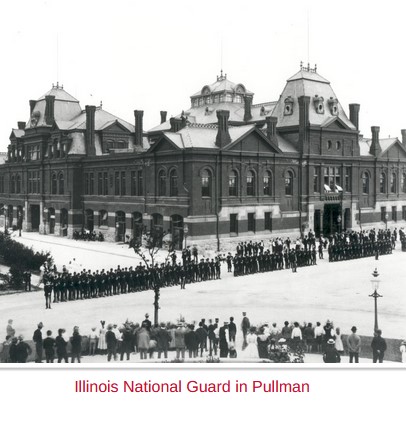
Richard Schneirov
Labor historian RIchard Schneirov provides a concise introduction to the Pullman Strike of 1894
Table of Contents
Introduction
George M. Pullman and the Sleeping Car Business
The Town of Pullman
The Pullman Strike and Boycott
Eugene V. Debs: Pullman Strike Leader and Socialist
The Pullman Strike: Consequences, Trends, and Legacies
A Short list of Suggested Documents
Bibliography
Richard Schneirov is a leading historian on the Pullman strike. This is a series of lectures that is suitable introduction to the course of the strike

Richard Schneirov
University of Illinois Press (1999)
"The Pullman strike of 1894 shut down the rail system from Chicago to the West Coast, culminating two decades of labor unrest and helping to define an epochal transition in American history. In this wide-ranging collection, leading labor historians use the prism of the Pullman strike to broaden our understanding of the crisis of the 1890s. By examining the strike in the context of continuities and changes in labor organization, the influences of gender and community, the public representation and contested meaning of labor conflict, the emergence of a new politics of progressive reform, the development of a regulatory state, and a changing legal environment, these essays resituate the Pullman conflict in its historical context. Illuminating one of the most important events in labor's past,
'The Pullman Strike and the Crisis of the 1890s' testifies to the pivotal importance of the Pullman conflict and its aftermath for understanding the course of American history."-- Back cover
Dress rehearsal for Pullman : the Knights of Labor and the 1890 New York Central Strike / Robert E. Weir
-- The search for unity among railroad workers : the Pullman Strike in perspective / Susan E. Hirsch -
- A modern Lear and his daughters : gender in the model town of Pullman / Janice L. Reiff
-- Photography and the Pullman Strike : remolding perceptions of labor conflict by new visual communication / Larry Peterson
-- Advocate for democracy : Jane Addams and the Pullman Strike / Victoria Brown
-- The federal judiciary, free labor, and equal rights / Melvyn Dubofsky
-- The crisis of 1894 and the legacies of producerism / Shelton Stromquist -
- Labor and the new liberalism in the wake of the Pullman Strike / Richard Schneirov
-- Epilogue: The Pullman Boycott and the making of modern America / David Montgomery.
these essays resituate the Pullman conflict in its historical context.
Richard Schneirov, NIU digital
Labor historian Richard Schneirov has a solid introduction to the subject, in written form at this link. See also his set of lectures. Introduction
Chicago: Storm Center of Class Conflict
Albert Parsons and the Rise of Anarchism
The Movement for the Eight Hour Day and the Origins of the Haymarket Affair
The Bomb
From the Trial to the Hangings
Legacy
Written introduction to the Haymarket events
Richard Schneirov, Northern Illinois University
In 2008, labor historian Richard Schneirov recorded his lecture “The Haymarket Bomb in Historical Context,” at NIU. The lecture and audio can be found in the NIU Digital Library. It is presented in short segments of 3-8 minutes, which makes it a great series to digest in snippets, too. Schneirov’s lecture would be an appropriate broad introduction to a student interested in researching Haymarket, or anyone else looking for a reliable account of the Haymarket Affair
It is difficult to find the order easily on the site, so use this as a guide to listening sequence:
Schneriov’s lecture begins prior to the bomb throwing to establish the primary influences leading to the Haymarket Affair. He outlines “Workers’ Organization in Chicago,” as well as the national concern for “The Labor Question” at the turn of the century. He also focuses on prevalent ideologies of “Anarchism,” demystifying many of the misconceptions with the term, before examining a leading anarchist involved in the labor movement, “Albert Parsons.”
To Schneriov, the immediate context of the Haymarket Affair begins in “Chicago 1886” with “The Eight Hour Day” Movement and the “Strike at McCormick Works.” He then examines the “Anarchist Assembly,” a meeting of anarchist revolutionaries after the police attack on McCormick workers. The meeting was used prominently during the Haymarket trial as proof of conspiracy for anarchist involvement in “The Haymarket Riot”. He then discusses “The Trial” in response to the bombing, the “Punishment and Clemency” of the accused, and most importantly, “A Politics of Fear” that developed against the labor movement following Haymarket. Lastly, Schneirov leaves us with a suggested list of “Further Reading.” Please note that Professor Schneirov’s lecture was conducted in 2008.
Historian Richard Schneirov interviewed about Haymarket 1886. This is effectively a series of mini-lectures on the Haymarket Affair. It sets the context, demystifies anarchism as a concept, profiles Albert Parsons and the quest for an 8-hour day as well as the strikes, trial and aftermath.

Richard Schweid
ILR Press (2021)
The book is an absorbing look into our home health care system. To write the book, Richard Schweid rented an apartment in the Bronx, sat in on training courses provided by Cooperative Health Care Associates for home health aides, and lived among those he was interviewing. With one compelling story after another, Schweid introduces us to the people who take these jobs and gives us a visceral sense of what home health care entails, the agencies that provide it, the policies that regulate it, and the clients who receive it.
introduces us to the people who take these jobs and gives us a visceral sense of what home health care entails, the agencies that provide it, the policies that regulate it, and the clients who receive it.

Richard White
W.W. Norton & Co (2011)
A history of the transcontinental railroads and how they transformed America in the decades after the Civil War. The transcontinental railroads of the late nineteenth century were the first corporate behemoths. Their attempts to generate profits from proliferating debt sparked devastating panics in the U.S. economy. Their dependence on public largess drew them into the corridors of power, initiating new forms of corruption. Their operations rearranged space and time, and remade the landscape of the West. As wheel and rail, car and coal, they opened new worlds of work and ways of life. Their discriminatory rates sparked broad opposition and a new antimonopoly politics.
With characteristic originality, range, and authority, Richard White shows the transcontinentals to be pivotal actors in the making of modern America. But the triumphal myths of the golden spike, robber barons larger than life, and an innovative capitalism all die here. Instead we have a new vision of the Gilded Age, often darkly funny, that shows history to be rooted in failure as well as success
Uses a labor lens for some chapters of this major book on the power of corporate railroads
Richmond Dispatch, History Matters
The annual convention of the Knights of Labor convened in Richmond, Virginia, a region divided by racial and political conflict, on October 4, 1886. In the 1880s, Southern politics was split between southern Democrats who sought to “redeem” the old order and a progressive (and in some places interracial) political movement that sought to extend the gains won by ordinary black and white southerners during the Reconstruction era. As more than one thousand delegates gathered from across the country in the former capital of the Confederacy, the labor and political reform movements hoped the convention would be a launching pad for their message of racial peace and political reform. But the convention and the Knights of Labor were quickly plunged into conflict over the organization’s attitude toward the question of social equality between the races. The white citizens of Richmond and elsewhere in the country were fascinated and horrified by repeated reports of “race mixing” in press accounts about the Knights of Labor convention, typified by these three items from the Richmond Dispatch of October 6, 1886.
Transcript detailing positions on racial equality in the Knights of Labor.

Rick Fantasia
University of California Press (1988)
A commonplace assumption about American workers is that they lack class consciousness. This perception has baffled social scientists, demoralized activists, and generated a significant literature on American exceptionalism. In this provocative book, a young sociologist takes the prevailing assumptions to task and sheds new light upon this very important issue. In three vivid case studies Fantasia explores the complicated, multi-faceted dynamics of American working-class consciousness and collective action.
Preface
Part One: Theoretical Directions and the Historical Terrain
1. Culture and Consciousness in Action
2. Corporate Action and the Bounds of Solidarity
Part Two: Contemporary Expressions of Consciousness and Action
3· The Internal Dynamics of Wildcat Strikes: Routinization and Its Discontents
4· Union Organizing and Collective Interaction: "Like a Thief in the Night"
5· The Strike as Emergent Culture: Community and Collective Action
6. The Limits and Possibilities of Trade Union Action Appendix The Measures Taken: Some Notes on Methodology Notes Bibliography Index
Explores the complicated, multi-faceted dynamics of American working-class consciousness and collective action in order to disprove the notion that America lacks it

Rick Halpern
University of Illinois Press (1997)
This detailed study of the relationship between race relations and unionization in Chicago's meatpacking industry draws on traditional primary and secondary materials and on an extensive set of interviews conducted in the mid-1980s that explore subjective dimensions of the workers' experience
a study of the relationship between race relations and unionization in Chicago's meatpacking industry.

Rick Prelinger
Rick Prelinger began collecting media in 1983, amassing 60,000 a wide variety of "ephemeral" films, now housed in Library of Congress. There are over 11,000 digitized and videotape titles including home movies, amateur and industrial films acquired since 2002. The link here takes you to those focused on labor and industry. Change the search to find other topics.
See some of the labor and industry movies from the renowned Prelinger collection

Risa Goluboff
Oxford University Press (2016)
In 1950s America, it was remarkably easy for police to arrest almost anyone for almost any reason. The criminal justice system-and especially the age-old law of vagrancy-played a key role not only in maintaining safety and order but also in enforcing conventional standards of morality and propriety. A person could be arrested for sporting a beard, making a speech, or working too little. Yet by the end of the 1960s, vagrancy laws were discredited and American society was fundamentally transformed. What happened? In Vagrant Nation, Risa Goluboff provides a truly groundbreaking account of this transformation. By reading the history of the 1960s through the lens of vagrancy laws, Goluboff shows how constitutional challenges to long-standing police practices were at the center of the multiple movements that made "the 1960s." Vagrancy laws were not just about poor people. They were so broad and flexible-criminalizing everything from immorality to wandering about-that they made it possible for the police to arrest anyone out of place in any way: Beats and hippies; Communists and Vietnam War protestors; racial minorities, civil rights activists, and interracial couples; prostitutes, single women, and gay men, lesbians, and other sexual minorities. As hundreds of these "vagrants" and their lawyers claimed that vagrancy laws were unconstitutional, the laws became a flashpoint for debates about radically different visions of order and freedom. In Goluboff's compelling portrayal, the legal campaign against vagrancy laws becomes a sweeping legal and social history of the 1960s. It touches on movements advocating everything from civil rights to peace to gay rights to welfare rights to cultural revolution. As Goluboff links the human stories of those arrested to the great controversies of the time, she makes coherent an era that often seems chaotic. She also powerfully demonstrates how ordinary people, with the help of lawyers and judges, can change the meaning of the Constitution. By 1972, the Supreme Court announced that vagrancy laws that had been a law enforcement staple for four hundred years were no longer constitutional. That decision, as well as the social movements and legal arguments that prompted it, has had major consequences for current debates about police power and constitutional rights. Clashes over everything from stop and frisk to homelessness to public protests echo the same tension between order and freedom that vagrancy cases tried to resolve. Since the early 1970s, courts, policymakers, activists, and ordinary citizens have had to contend with the massive legal vacuum left by vagrancy law's downfall. Battles over what, if anything, should replace vagrancy laws, like battles over the legacy of the sixties transformations themselves, are far from over"--
A history of vagrancy laws in the United States during the 1960s, arguing they provided police with the means to arrest anyone for any reason
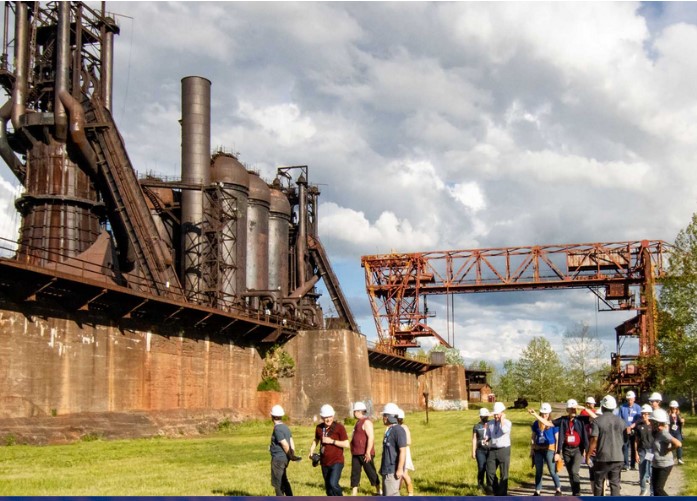
Rivers of Steel
There is no union-oriented tour, but there is an Industrial Tour, which is a guided tour of the Carrie Blast Furnaces National Historic Landmark. Tours highlight the site’s iron-making technology, its workers, and their culture." There is also a tour called "The Black Experience at the Carrie Furnaces, and one featuring "a tour of the international collection of graffiti murals located at the Carrie Blast Furnaces. Learn about the individual works of art and the overall history and culture of graffiti. After your tour, you’ll have a chance to try it for yourself!" There is also one promising an "experience" of postindustrial art.
multiple tours on a range of topics and perspectives, including graffiti art in postindustrial steel towns.

Rob Rosenthal
In 1977, Rob Rosenthal interviewed 35 men and women who participated in or remembered the 1919 General Strike. He recorded the interviews while researching his MA thesis After the Deluge: The Seattle General Strike of 1919 and its Aftermath (UC Santa Barbara, 1980). Now a Professor of Sociology at Wesleyan University, Rosenthal has generously agreed to share these oral histories with the Seattle General Strike Project. These audio MP3 files and transcripts comprise a rare and valuable resource. The narrators speak not only about the events of 1919 but about later aspects of Pacific Northwest labor and political history.
Dave Beck and Earl George are the most famous of the men and women interviewed. Later to serve as President of the International Brotherhood of Teamsters, Beck was 24 years old at the time of the General Strike, newly discharged from the Navy and was part of a group of Teamsters who opposed the strike. Earl George later became a Communist and the first African American to serve as president of an ILWU local. In 1919 he was newly released from the army and working on the waterfront. Beck and George are the only narrators whose names can be identified. The others use pseudonyms. Rosenthal explains the reasons and the interview process here.
The narrators were elderly at the time of the interview; most had been in their teens or 20s in 1919. They range across occupations, social classes, and political perspectives; including a number who joined the IWW and the Communist Party. Rosenthal was exploring the political legacies of the strike in his thesis and he asked important questions about how the dramatic events of 1919 lived on in political practice and historical memory.
Audio interviews with people who lived through the Seattle General Strike.

Robert Asher
State University of New York Press (1990)
I Introduction
1 American Capitalism, Labor Organization, and the Racial/Ethnic Factor: An Exploration
II Non-White Workers in the United States Asian
2 Ethnicity and Class in Hawaii: The Plantation Labor Experience, 1835-1920
3 Chinese American Agricultural Workers and the Anti-Chinese Movement in Los Angeles, 1870-1890
4 Ethnic Life and Labor in Chicago's Pre-World-War-II Filipino Community
5 Border Proletarians: Mexican-Americans and the International Union of Mine, Mill, and Smelter Workers, 1939-1946
6 Puerto Ricans in the Garment Industry of New York City, 1920-1960
7 The Red Scare and Black Workers in Alabama: The International Union of Mine, Mill, and Smelter Workers, 1945-53
III European-Background Workers in the United States Northern and Western Europe
8 Immigration, Ethnicity and the American Working-Class Community: Fall River, 1850-1900
9 Scottish-Americans and the Beginnings of the Modern Class Struggle: Immigrant Coal Miners in Northern Illinois, 1865-1889
10 The German Brewery Workers of New York City in the Late Nineteenth Century
11 Catholic Corporatism, French Canadian Workers, and Industrial Unionism in Rhode Island, 1938-1956
12 British and Irish Militants in the Detroit UAW in the 1930s
13 Women's Work, Family Economy and Labor Militancy: The Case of Chicago's Packing-House Workers, 1900-1922
14 Anthony Capraro and the Lawrence Strike of 1919
15 The Transformation of Working-Class Ethnicity: Corporate Control, Americanization, and the Polish Immigrant Middle Class in Bayonne, New Jersey, 1915-1925
an anthology on race, ethnicity and the history of American working-class struggles.

Robert Belton
Duke Power Story (2014)
On March 8, 1971, the Supreme Court of the United States decided a case, Griggs v. Duke Power Co., brought by thirteen African American employees who worked as common laborers and janitors at one of Duke Power's facilities. The decision, in plaintiffs' favor, marked a profound and enduring challenge to the dominance of white males in the workplace. In this book, Robert Belton, who represented the plaintiffs for the NAACP Legal Defense Fund and argued the case in the lower courts, gives a firsthand account of legal history in the making - and a behind-the-scenes look at the highly complex process of putting civil rights law to work. Title VII of the Civil Rights Act of 1964 eliminated much blatant discrimination, but after its enactment and before Griffs, businesses held the view that a commitment to equality required only eliminating policies and practices that were intentionally discriminatory - the 'disparate treatment' test. In Griggs v. Duke Power Co., the Supreme Court ruled that a 'disparate impact' text could also apply - that the 1964 Civil Rights Act extended to practices with a discriminatory effect. In tracing the impact of the Griggs ruling on employment practices, this book documents the birth, maturation, death, and rebirth of the disparate impact theory, including its erosion by later Supreme Court decisions and its restoration by congressional action in the Civil Rights Act of 1991. Belton conducts us through this historic case from the original lawsuit to the Supreme Court decision in Griggs and beyond as he traces the post-Griggs developments in the lower courts, the Supreme Court, and Congress; he provides informed insights into both litigators' and judges' perspectives and decision-making. His work situates the case in its legal, social, and historical contexts and explores the relationship between public and private enforcement of the law, with a focus on the Legal Defense Fund's litigation campaign against employment discrimination. A detailed examination of the development of legal principles under Title VII, this book tells the story of this seminal decision on equal employment law and offers an unprecedented close-up view of personal conviction, legal strategy, and historical forces combining to effect dramatic social change"--Unedited summary from book jacket
A detailed examination of the development of legal principles under Title VII

Robert Bruno
Northern Illinois University Press (2003)
"How did the Chicago Teamsters Local 705, once notorious for corruption and despotism, become an organization that the Wall Street Journal hailed as "a model of reform"? In this compelling narrative, Bruno tells of the often violent, always contentious struggle to reform one of the nation's most powerful and independent union locals." Introduction
Part One-The Corruption and Redemption of Local 705
1. Teamsters' Power and Politics
2. Fighting Corruption
3. Democratic Governance 4. Democracy Brings Results Part Two-Union Democracy, Elections, and the Politics of Local 705
5. The Reformers Split
6. The Nomination of Political Parties
7. The Campaign Begins
8. Campaign Platforms and Rank-and-File Votes
9. Campaign Issues
10. The 705 Vote Epilogue Notes Bibliography Index
tells of the struggle to reform one of the nation's most powerful and independent union locals from corruption to a model organization

Robert Bruno
University of Illinois Press (2024)
For more than twenty years, Robert Bruno has taught labor history and labor studies to union members from a wide range of occupations and demographic groups. In the class, he asked his students to finish the question "Work is-?" in six words or less. The thousands of responses he collected provide some of the rich source material behind What Work Is. Bruno draws on the thoughts and feelings experienced by workers in the present day to analyze how we might design a future of work. He breaks down perceptions of work into five categories: work and time; the space workers occupy; the impact of work on our lives; the sense of purpose that motivates workers; and the people we work for, in all senses of the term. Far-seeing and sympathetic, What Work Is merges personal experiences with research, poetry, and other diverse sources to illuminate workers' lives in the present and envision what work could be in the future"-- Provided by publisher
Bruno draws on the thoughts and feelings experienced by workers in the present day to analyze how we might design a future of work

Robert Bussel
University of Illinois Press (2015)
During the 1950s and 1960s, labor leaders Harold Gibbons and Ernest Calloway championed a new kind of labor movement that regarded workers as "total persons" interested in both workplace affairs and the exercise of effective citizenship in their communities.
Working through Teamsters Local 688 and viewing the city of St. Louis as their laboratory, this remarkable interracial duo forged a dynamic political alliance that placed their "citizen members" on the front lines of epic battles for urban revitalization, improved public services, and the advancement of racial and economic justice. Parallel to their political partnership, Gibbons functioned as a top Teamsters Union leader and Calloway as an influential figure in St. Louis's civil rights movement. Their pioneering efforts not only altered St. Louis's social and political landscape but also raised fundamental questions about the fate of the post-industrial city, the meaning of citizenship, and the role of unions in shaping American democracy.
championed a new kind of labor movement that regarded workers as "total persons" interested in both workplace affairs and the exercise of effective citizenship in their communities.

Robert Bussel
Pennsylvania State University Press (1999)
During the first half of the twentieth century, many young intellectuals and reformers sympathized with the aspirations of working people and supported the struggles of the labor movement. Powers Hapgood (1899–1949) was one of the most colorful and recognizable symbols of this crucial historical relationship. A Harvard graduate and the scion of a famous Progressive-Era family, Hapgood chose to devote his life to the working class. His fascinating political career, marked by a staunch commitment to workers' rights and civil liberties, also included important roles in the Socialist Party and the Congress of Industrial Organizations (CIO). Robert Bussel's book is the first full-length biography of this prominent American Socialist, labor organizer, and social crusader.
Hapgood participated in some of the most stirring historical events of his time—an epic coal miners' strike in Western Pennsylvania, an insurgent attempt to oust John L. Lewis as president of the United Mine Workers of America, the defense of Niccolo Sacco and Bartolomeo Vanzetti, and the electrifying victories of sit-down strikers in Akron, Ohio, and Flint, Michigan. In the latter stages of his career, he took unpopular stands on issues of racial justice, civil liberties, and union democracy that foreshadowed the fault lines along which the post–World War II labor movement would founder. Recording and reflecting upon these experiences in journals he kept throughout his life, Hapgood left behind an unusually rich chronicle of the American working class, the labor movement, and the practice of radical politics.
Hapgood's career illustrates important developments in the evolution of liberalism and radicalism, the industrial union movement, and the relationship between the middle and working classes in twentieth-century America. At a time when the American labor movement is attempting to recruit young people, forge a rapprochement with liberals, and reclaim its role as a voice for American workers, the appearance of a Hapgood biography is timely.
A Harvard graduate and the scion of a famous Progressive-Era family, Hapgood chose to devote his life to the working class. Became miner, socialist and CIO organizer

Robert C. McGreevey
Cornell University Press (2018)
Borderline Citizens explores the intersection of U.S. colonial power and Puerto Rican migration. Robert C. McGreevey examines a series of confrontations in the early decades of the twentieth century between colonial migrants seeking work and citizenship in the metropole and various groups—employers, colonial officials, court officers, and labor leaders—policing the borders of the U.S. economy and polity. Borderline Citizens deftly shows the dynamic and contested meaning of American citizenship.
At a time when colonial officials sought to limit citizenship through the definition of Puerto Rico as a U.S. territory, Puerto Ricans tested the boundaries of colonial law when they migrated to California, Arizona, New York, and other states on the mainland. The conflicts and legal challenges created when Puerto Ricans migrated to the U.S. mainland thus serve, McGreevey argues, as essential, if overlooked, evidence crucial to understanding U.S. empire and citizenship.
McGreevey demonstrates the value of an imperial approach to the history of migration. Drawing attention to the legal claims migrants made on the mainland, he highlights the agency of Puerto Rican migrants and the efficacy of their efforts to find an economic, political, and legal home in the United States. At the same time, Borderline Citizens demonstrates how colonial institutions shaped migration streams through a series of changing colonial legal categories that tracked alongside corporate and government demands for labor mobility. McGreevey describes a history shaped as much by the force of U.S. power overseas as by the claims of colonial migrants within the United States.
explores how colonial migrations have been coproduced by the interaction of legal categories, changing political economies, and the demands of migrants themselves