


Explore thousands of items. Use clickable links under collections and library for broad categories. Search by keyword (including topic,city, state.) Limit by time period, type of item, region. See our search tips page for more assistance.
Collections
Library
Type
Region
Coverage:
-
Published:
-

Robert T. Chase
The University of North Carolina Press (2022)
In the early twentieth century, the brutality of southern prisons became a national scandal. Prisoners toiled in grueling, violent conditions while housed in crude dormitories on what were effectively slave plantations. This system persisted until the 1940s when, led by Texas, southern states adopted northern prison design reforms. However, the transition to penitentiary cells only made the endemic violence more secretive, and the reformers' efforts had only made things worse--now it was up to the prisoners to fight for change. Drawing from three decades of legal documents compiled by prisoners, Robert T. Chase narrates the struggle to change prison from within. Told from the vantage point of the prisoners themselves, this book highlights untold but devastatingly important truths about the histories of labor, civil rights, and politics in the United States."-- Provided by publisher
Told from the vantage point of the prisoners themselves, this book highlights untold but devastatingly important truths about the histories of labor, civil rights, and politics in the United States

Robert Townsend
The dramatized story of union activist Asa Philip Randolph's efforts to organize the black porters of the Pullman Rail Company in 1920s America.
A Showtime TV film about A. Philip Randolph, Milton Webster, and Ashley Totten, and Randolph's efforts to organize the Pullman Porters who were all black.

Robert V. Bruce
I.R. Dee (1960)
Not simply a story of a year from our past but a dramatic account of a social and political uprising that became a crisis in the course of American development. “A spectacular story.”—New York Times.
a dramatic account of 1877, a year which saw racial violence, the first national strike, and more in the United States

Robert W. Cherny
Rutgers University Press (2004)
The American labor movement seemed poised on the threshold of unparalleled success at the beginning of the post-World War II era. Fourteen million strong in 1946, unions represented thirty five percent of non-agricultural workers. Why then did the gains made between the 1930s and the end of the war produce so few results by the 1960s? This collection addresses the history of labor in the postwar years by exploring the impact of the global contest between the United States and the Soviet Union on American workers and labor unions. The essays focus on the actual behavior of Americans in their diverse workplaces and communities during the Cold War. Where previous scholarship on labor and the Cold War has overemphasized the importance of the Communist Party, the automobile industry, and Hollywood, this book focuses on politically moderate, conservative workers and union leaders, the medium-sized cities that housed the majority of the population, and the Roman Catholic Church. These are all original essays that draw upon extensive archival research and some upon oral history sources
addresses the history of labor in the postwar years by exploring the impact of the contest between the United States and the Soviet Union on American workers and labor unions.
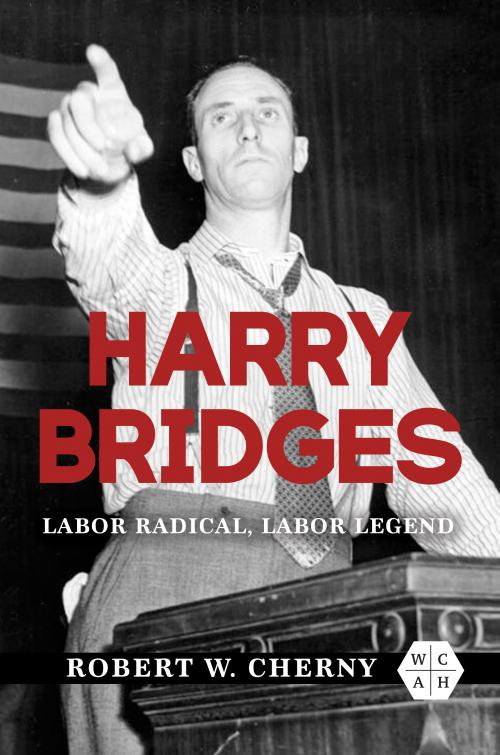
Robert W. Cherny
University of Illinois Press (2023)
The iconic leader of one of America's most powerful unions, Harry Bridges put an indelible stamp on the twentieth century labor movement.
Robert Cherny's monumental biography tells the life story of the figure who built the International Longshore and Warehouse Union (ILWU) into a labor powerhouse that still represents almost 30,000 workers.
An Australian immigrant, Bridges worked the Pacific Coast docks. His militant unionism placed him at the center of the 1934 West Coast Waterfront Strike and spurred him to expand his organizing activities to warehouse laborers and Hawaiian sugar and pineapple workers.
Cherny examines the overall effectiveness of Bridges as a union leader and the decisions and traits that made him effective. Cherny also details the price paid by Bridges as the US government repeatedly prosecuted him for his left-wing politics. Drawing on personal interviews with Bridges and years of exhaustive research, Harry Bridges places an extraordinary individual and the ILWU within the epic history of twentieth-century labor radicalism"-- Provided by publisher
tells the life story of the figure who built the International Longshore and Warehouse Union (ILWU) into a labor powerhouse

Robert Woodrum
University of Georgia Press (2007)
In 1930 almost 13,000 African Americans worked in the coal mines around Birmingham, Alabama. They made up 53 percent of the mining workforce and some 60 percent of their union's local membership. At the close of the twentieth century, only about 15 percent of Birmingham's miners were black, and the entire mining workforce had been sharply reduced. Robert H. Woodrum offers a challenging interpretation of why this dramatic decline occurred and why it happened during an era of strong union presence in the Alabama coalfields.
Drawing on union, company, and government records as well as interviews with coal miners, Woodrum examines the complex connections between racial ideology and technological and economic change. Extending the chronological scope of previous studies of race, work, and unionization in the Birmingham coalfields, Woodrum covers the New Deal, World War II, the postwar era, the 1970s expansion of coalfield employment, and contemporary trends toward globalization.
The United Mine Workers of America's efforts to bridge the color line in places like Birmingham should not be underestimated, says Woodrum. Facing pressure from the wider world of segregationist Alabama, however, union leadership ultimately backed off the UMWA's historic commitment to the rights of its black members. Woodrum discusses the role of state UMWA president William Mitch in this process and describes Birmingham's unique economic circumstances as an essentially Rust Belt city within the burgeoning Sun Belt South. This is a nuanced exploration of how, despite their central role in bringing the UMWA back to Alabama in the early 1930s, black miners remained vulnerable to the economic and technological changes that transformed the coal industry after World War II.
coal mining in Alabama from the New Deal to the present, with a penetrating look at race and class
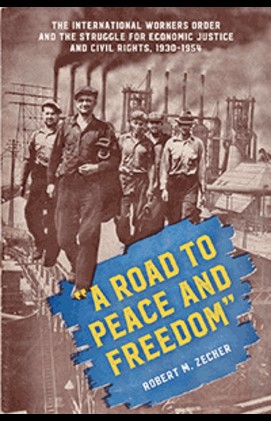
Robert Zecker
Temple University Press (2018)
The International Workers Order was an American consortium of ethnic mutual self-insurance societies that advocated for unemployment insurance, Social Security and vibrant industrial unions. This interracial leftist organization guaranteed the healthcare of its 180,000 white, black, Hispanic and Arabic working-class members. But what accounted for the popularity-and eventual notoriety-of this Order? Mining extensive primary sources, Robert Zecker gives voice to the workers in "A Road to Peace and Freedom." He describes the group's economic goals, commitment to racial justice, and activism, from lobbying to end segregation and lynching in America to defeating fascism abroad. Zecker also illustrates the panoply of entertainment, sports, and educational activities designed to cultivate the minds and bodies of members. However, the IWO was led by Communists, and the Order was targeted for red-baiting during the Cold War, subject to government surveillance, and ultimately "liquidated." Zecker explains how the dismantling of the IWO and the general suppression of left-wing dissenting views on economic egalitarianism and racial equality had deleterious effects for the entire country. Moreover, Zecker shows why the sobering lesson of the IWO remains prescient today
first comprehensive history of the International Workers Order

Roberta Gold
University of Illinois Press (2014)
In postwar America, not everyone wanted to move out of the city and into the suburbs. For decades before World War II, New York's tenants had organized to secure renters' rights. After the war, tenant activists raised the stakes by challenging the newly-dominant ideal of homeownership in racially segregated suburbs. They insisted that renters as well as owners had rights to stable, well-maintained homes, and they proposed that racially diverse urban communities held a right to remain in place. Further, the activists asserted that women could participate fully in the political arenas where these matters were decided.
This work shows that New York City's tenant movement made a significant claim to citizenship rights that came to accrue, both ideologically and legally, to homeownership in postwar America Grounded in archival research and oral history, When Tenants Claimed the City: The Struggle for Citizenship in New York City Housing shows that New York City's tenant movement made a significant claim to citizenship rights that came to accrue, both ideologically and legally, to homeownership in postwar America. Roberta Gold emphasizes the centrality of housing to the racial and class reorganization of the city after the war, the prominent role of women within the tenant movement, and their fostering of a concept of "community rights" grounded in their experience of living together in heterogeneous urban neighborhoods.
Argues that the New York City's tenant movement made a significant claim to citizenship rights throught their push for safer, and more equitable, housing

Robin Archer
Princeton University Press (2007)
"Why is the United States the only advanced capitalist country with no labor party? This question is one of the great enduring puzzles of American political development, and it lies at the heart of a fundamental debate about the nature of American society. Tackling this debate head-on, Robin Archer puts forward a new explanation for why there is no American labor party - an explanation that suggests that much of the conventional wisdom about "American exceptionalism" is untenable." "Conventional explanations rely on comparison with Europe, Archer challenges these explanations by comparing the United States with its most similar New World counterpart - Australia. This comparison is particularly revealing, not only because the United States and Australia share many fundamental historical, political, and social characteristics, but also because Australian unions established a labor party in the late nineteenth century, just when American unions, against a common backdrop of industrial defeat and depression, came closest to doing something similar." "Archer examines each of the factors that could help explain the American outcome, and his systematic comparison yields unexpected conclusions. He argues that prosperity, democracy, liberalism, and racial hostility often promoted the very changes they are said to have obstructed. And he shows that it was not these characteristics that left the United States without a labor party, but, rather, the powerful impact of repression, religion, and political sectarianism."--Jacket
Compares America and Australia, argues that repression, religion, and political sectarianism are reasons for America's lack of a labor party.
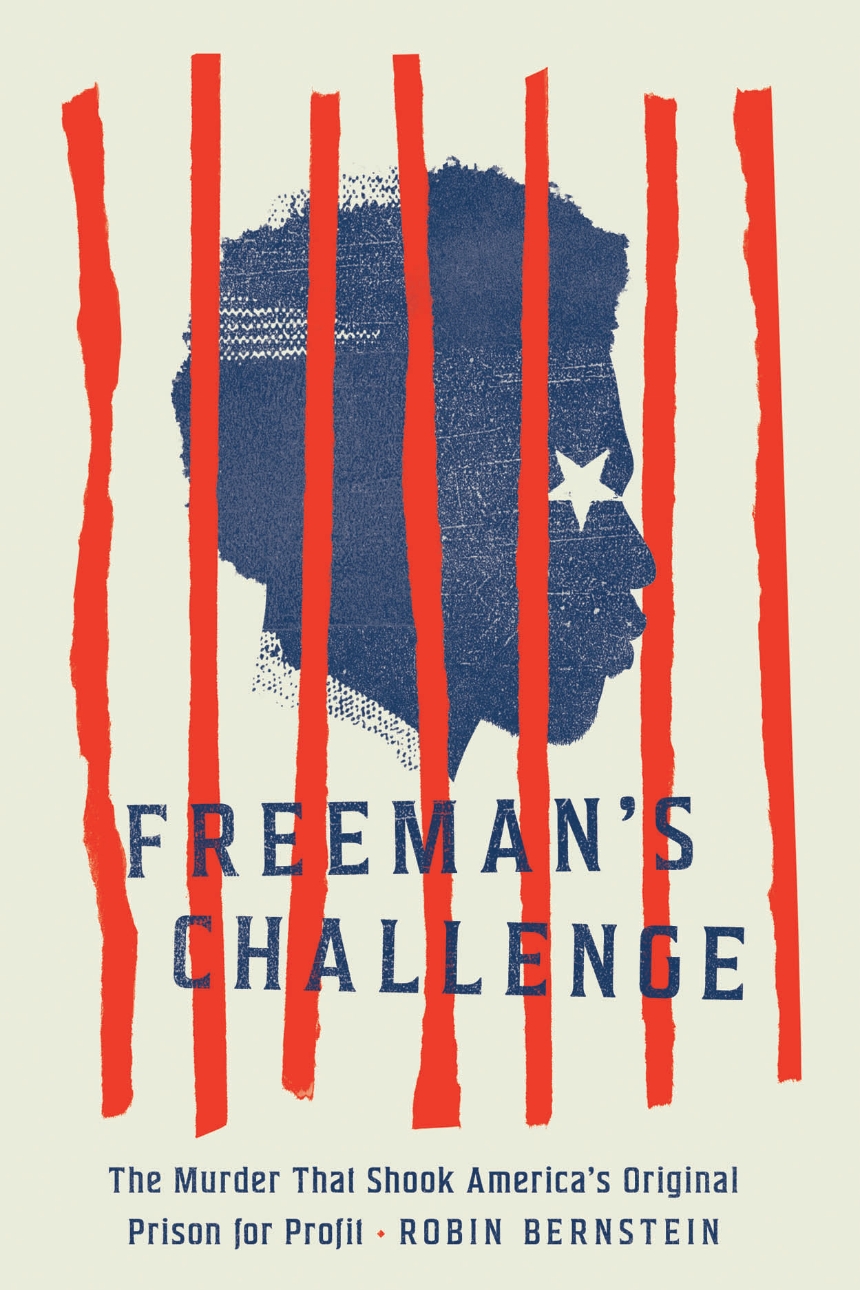
Robin Bernstein
University of Chicago Press (2024)
Robin Bernstein relates a bloody tale of race, murder, and injustice that forces us to rethink the origins and consequences of America's immoral system of prisons for profit. Bernstein brings to life the story of William Freeman, a free Black man who in 1840 was forced into unpaid labor as an inmate of Auburn State Prison in New York. After his release, he murdered four members of a white family, as revenge for the theft of his labor. His trial saw the crystallization of a nefarious ideology-the idea that African Americans are inherently criminal-yet it also shaped Auburn as an important node in the long battle for Black freedom"--
The story of William Freeman, a free Black man who was forced into unpaid labor as an inmate of Auburn State Prison, murdering four members of a white family as revenge for the theft of his labor after being released.

Robin D. G. Kelley
The University of North Carolina Press (2015)
A groundbreaking contribution to the history of the "long Civil Rights movement," this book tells the story of how, during the 1930s and 40s, Communists took on Alabama's repressive, racist police state to fight for economic justice, civil and political rights, and racial equality. The Alabama Communist Party was made up of working people without a Euro-American radical political tradition: devoutly religious and semiliterate Black laborers and sharecroppers, and a handful of whites, including unemployed industrial workers, housewives, youth, and renegade liberals. In this book, the author reveals how the experiences and identities of these people from Alabama's farms, factories, mines, kitchens, and city streets shaped the Party's tactics and unique political culture. The result was a remarkably resilient movement forged in a racist world that had little tolerance for radicals. After discussing the book's origins and impact in a new preface written for this twenty-fifth-anniversary edition, the author reflects on what a militantly antiracist, radical movement in the heart of Dixie might teach contemporary social movements confronting rampant inequality, police violence, mass incarceration, and neoliberalism
tells the story of how Communists took on Alabama's repressive, racist police state to fight for economic justice, civil and political rights, and racial equality.

Robin D. G. Kelley
The Free Press (1996)
Many black strategies of daily resistance have been obscured--until now. Race rebels, argues Kelley, have created strategies of resistance, movements, and entire subcultures. Here, for the first time, everyday race rebels are given the historiographical attention they deserve, from the Jim Crow era to the present
Introduction: Writing black working-class history from way, way below
PART I: "WE WEAR THE MASK": HIDDEN HISTORIES OF RESISTANCE. Shiftless of the world unite! ; "We are not what we seem": the politics and pleasures of community ; Congested terrain: resistance of public transportation ; Birmingham's untouchables: the black poor in the age of civil rights
PART II: TO BE RED AND BLACK. "Afric's sons with banner red": African American Communists and the politics of culture, 1919-1934 ; "This ain't Ethiopia, but it'll do": African Americans and the Spanish Civil War
PART III: REBELS WITHOUT A CAUSE? The riddle of the Zoot: Malcolm Little and Black cultural politics during World War II ; Kickin' Reality, Kickin' Ballistics: "Gangsta Rap" and postindustrial Los Angeles
Afterword
Notes
everyday race rebels are given the historiographical attention they deserve, from the Jim Crow era to the present.

Robyn Muncy
Princeton University Press (2014)
Josephine Roche (1886-1976) was a progressive activist, New Deal policymaker, and businesswoman. As a pro-labor and feminist member of Franklin D. Roosevelt's administration, she shaped the founding legislation of the U.S. welfare state and generated the national conversation about health-care policy that Americans are still having today. In this gripping biography, Robyn Muncy offers Roche's persistent progressivism as evidence for surprising continuities among the Progressive Era, the New Deal, and the Great Society. Muncy explains that Roche became the second-highest-ranking woman in the New Deal government after running a Colorado coal company in partnership with coal miners themselves
Roche became the second-highest-ranking woman in the New Deal government after running a small Colorado coal company which proclaimed itself in partnership with workers
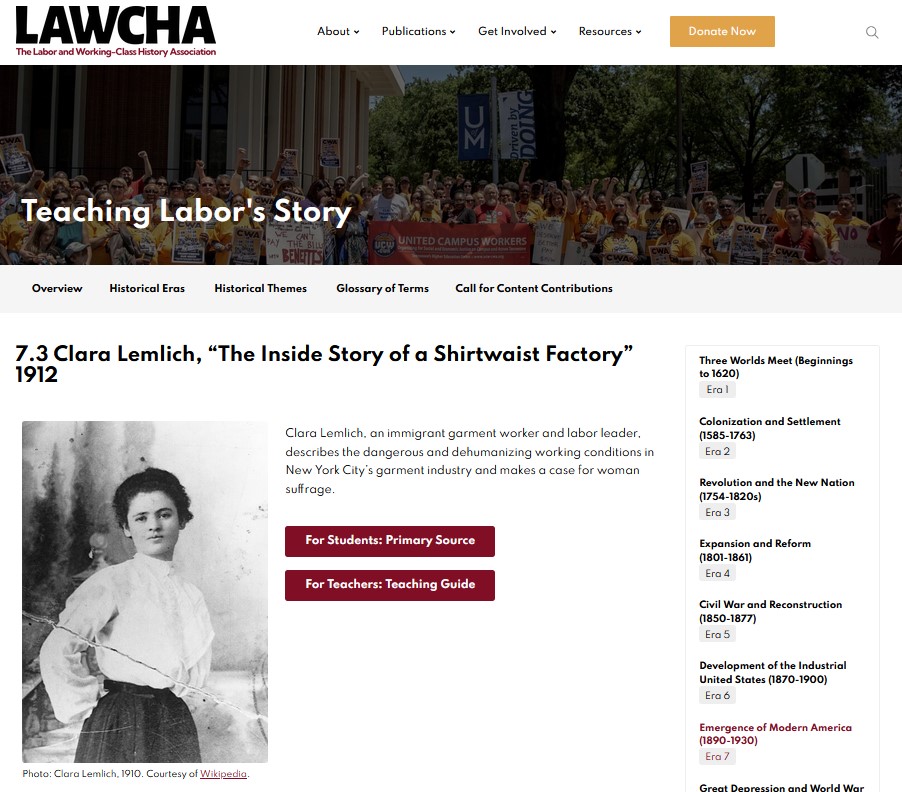
Robyn Muncy, Teaching Labor's Story
Clara Lemlich, an immigrant garment worker and labor leader, describes the dangerous and dehumanizing working conditions in New York City’s garment industry and makes a case for woman suffrage. Includes document and teaching guide
a 1912 essay 3 years after Triangle Shirtwaist Factory fire in New York city
Robyn Muncy, Teaching Labor's Story
This short introduction is designed for assisting teachers who want to learn essential context for teaching about women's paid labor from the late nineteenth century til the 1920s, written by a leading scholar and commissioned by Teaching Labor's Story of the Labor and Working Class HIstory Association
"Between the 1870s and 1920s, American women increasingly entered the paid labor force. They did so overwhelmingly because of economic need, and they were able to do so because the US economy was changing in ways that opened new wage-earning opportunities to women. Indeed, the economy changed in ways that relied on women’s labor power. In the main, the jobs offered to women subordinated them to men at the worksite and maintained their subordination beyond the workplace by paying wages insufficient to full health and economic security. Through determined collective action at their worksites, however, some wage-earning women challenged these inequalities, empowering themselves as both workers and women.
Aspiring professional women, largely excluded from traditional men’s professions, also engaged in collective action, theirs aimed partly at creating new professions for themselves. Altogether, women’s job-related organizing in the early twentieth century laid the foundation for movements and legislation that would reduce class inequalities later in the century and help to generate the women’s movements of the 1960s.
A short introduction to the topic of women in the paid labor force from 1870-1920

Rock Springs Independent, History Matters
Even in the late nineteenth-century American West, a notably violent region, the violence directed against Chinese immigrants was shocking. The Union Pacific railroad employed 331 Chinese and 150 whites in their coal mine in Rock Springs, Wyoming. On September 2, 1885, Chinese and white miners, who were paid by the ton, had a dispute over who had the right to work in a particularly desirable area of the mine. White miners, members of the Knights of Labor, beat two Chinese miners and walked off their jobs. That evening the white miners, armed with rifles, rioted and burned down the Chinese quarter. No whites were prosecuted for the murder of twenty-eight Chinese and $150,000 in property damage, even though the identities of those responsible were widely known. Although U.S. Army troops had to provide protection before some of the Chinese could finally return to their burned-out homes in Rock Springs, some defiantly continued to work in the Union Pacific mines into the next century. This jingoistic editorial in the Rock Springs, Wyoming, Independent, mourned the return of Chinese workers to the mining town the day after the riot.
Memorial of Chinese Laborers, Resident at Rock Springs, Wyoming Territory, accounting the riot and background
Rocky Mountain PBS
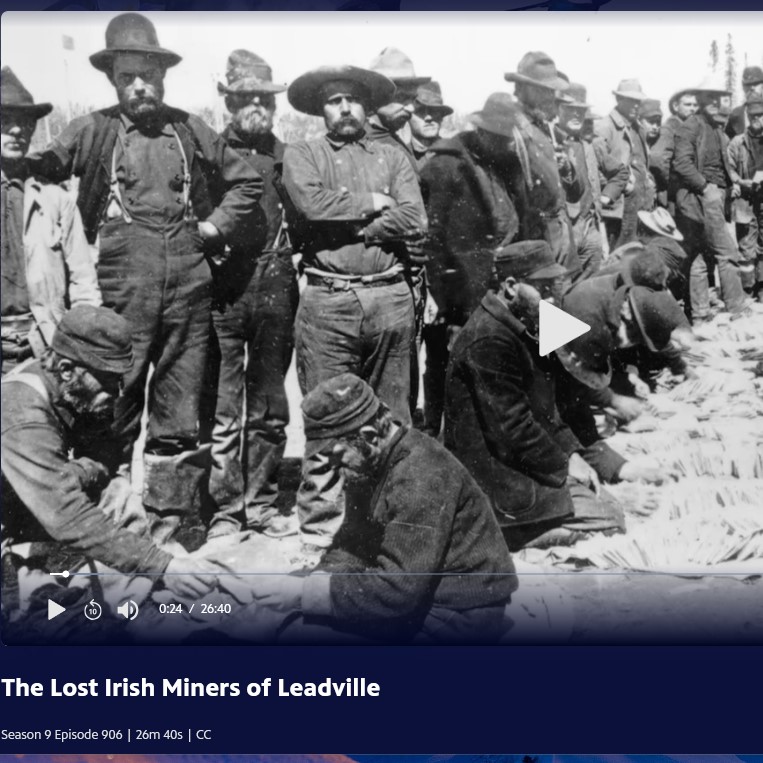
Tens of thousands of Irish miners fleeing famine risked it all for a better life in the mining boom of 1880’s Leadville. Their labor was cheap, their lives short, and their bodies often buried in the pauper section of Evergreen Cemetery. They were forgotten until a Denver historian, Jim Walsh researched them and found records of a total of 1300 unmarked pauper graves in the Evergreen Cemetery, 80% of which were of Irish immigrants. Most of the dead were women and children. This 27 minute documentary tells some of their struggles, the vast number of children in unmarked graves, and the memorial that came about to honor them.
Documentary about Leadville, Colorado immigrants, mostly Irish, who experienced a high toll of deaths and the 2023 memorial dedicated that finally recognizes them
Rod Mickleburgh
Harbour Publishing (2018)
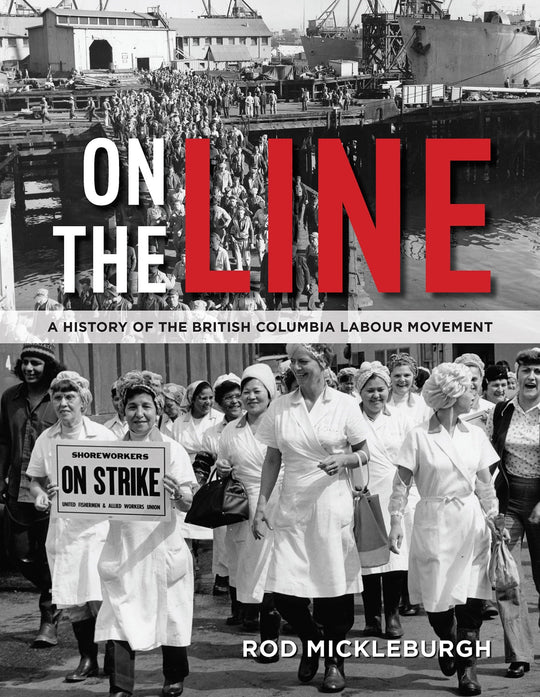
The BC tradition of fighting back against unfair pay and unsafe working conditions has been around since before the colony joined Confederation. In 1849 Scottish labourers at BC’s first coal mine at Fort Rupert went on strike to protest wretched working conditions, and it’s been a wild ride ever since. For years the BC labour movement was the most militant in the land, led by colourful characters like Ginger Goodwin, murdered for his pains, and pull-no-punches communist Harvey Murphy, who brought the house of labour down on himself with his infamous “underwear speech.”
Through years of battles with BC’s power elite and small victories followed by bitter defeats, BC unions established the five-day work week, the eight-hour day, paid holidays, the right to a safe, non-discriminatory workplace and many more taken-for-granted features of the modern work landscape. But unions’ enemies never sleep and, well into the second decade of the twenty-first century, battles still go on, like that of BC teachers in their long and ultimately successful struggle to improve classroom conditions. On the Line also highlights the role played by women, Indigenous and minority workers in working toward equality and democracy in workplaces and communities.
In prose that is both accessible and engaging, accompanied by over two hundred archival photos, Mickleburgh tells the important story of how BC’s labour organizations have shaped the economic, political and social fabric of the province—at a cost of much blood, sweat, toil and tears. This volume is the most comprehensive overview of labour’s struggle in BC and will be of particular interest to union members, community activists, academics and readers of regional history.
A comprehensive study of the BC labor movement and how it has impacted the province
Roderick N. Labrador
University of Illinois Press (2015)
Drawing on ten years of interviews and ethnographic and archival research, Building Filipino Hawai'i delves into the ways Filipinos in Hawai'i have balanced their pursuit of upward mobility and mainstream acceptance with a desire to keep their Filipino identity."-- Back cover Introduction: "Why do you want to go to Hawai'i?" -- Overlapping architectures -- "What's so p/funny?" -- "Anything but ..." -- "The center is not just for Filipinos, but for all of Hawai'i nei" -- Conclusion: Unsettling Hawai'i.
the ways Filipinos in Hawai'i have balanced their pursuit of upward mobility

Roger C. Hartley
The National Labor Relations Act (NLRA), signed into law by Franklin Delano Roosevelt in 1935, guarantees the right of private sector employees to organize into trade unions, engage in collective bargaining, and take collective action such as strikes. Since its passage, the NLRA has functioned as the foundational statute of United States labor law. Opposed by conservatives and members of the Republican Party from the beginning, its provisions were largely upheld by the Supreme Court until the 1960s. In the latter part of the twentieth century and into the twenty-first, however, the Court began to erode the protections of the NLRA. While some cases have received widespread attention from commentators and scholars, such as Starbucks Corp. v. McKinney (2024), there have been numerous detrimental rulings that are little discussed. Taken as a whole, the Supreme Court’s efforts to undermine the NLRA appear sustained and systematic.
In The Assault on American Labor Law, distinguished labor law professor Roger C. Hartley collects and carefully reviews every Supreme Court decision concerning the NLRA over the past sixty years. By examining approximately 100 cases, Hartley demonstrates that the Court has often operated more like a legislature than a judicial body, effectively amending the NLRA’s collectivist policy underpinnings in favor of the interests of individuals and businesses. These judicial decisions create staggering obstacles for American workers to collectively organize and force them to face globalization, deindustrialization, and technological change individually, without the negotiating leverage provided by union representation. While scholars have suggested individual reforms to re-establish the efficacy of the NLRA, Hartley’s thorough study illuminates how the current crisis in US labor law evolved—a comprehensive view that is necessary to help restore the rights of workers to unionize.
Reviewing the dismantling of American labor law in more than 100 Supreme Court cases

Roger Horowitz
University of Illinois Press (1997)
"Traces the rise--and subsequent fall--of the United Packinghouse Workers of America (UPWA). Roger Horowitz looks at local leaders and meatpacking workers in Chicago, Illinois, Kansas City, Kansas Sioux City, Iowa and Austin, Minnesota, closely examining the unionizing of the workplace and the prominent role of black workers and women in UPWA. Horowitz shows how three major firms in U.S. meat production and distribution became dominant by virtually eliminating union power.
traces the rise, and subsequent fall, of the United Packinghouse Workers of America (UPWA), closely examining the prominent role of black workers and women in UPWA.
Roger Williams, History Matters
Toronto: Champlain Society (1637)
Roger Williams, comments on Indian practices. European observers generally commented critically upon the leading role of Indian women in work. Roger Williams proved an exception. The minister, once head of the Salem church, was expelled from the Massachusetts Bay colony in 1635 for questioning the Puritan leadership. He helped found the colony of Rhode Island around Narragansett Bay on land purchased from the Narragansett people to the south, with whom he and the colony maintained generally good relations. He spent much of his life trying to understand the Indians 'customs and language, and published some of his sympathetic observations in his 1643 book Key into the Language of America where he offered a glossary of Algonquian words that revealed much about Indian life. Williams also criticized certain colonial practices, such as the occupation of Indian lands by Europeans, and advocated the separation of church and state and individual freedom in other writings.
the leading role of Indian women in work

Romain Huret
University of Pennsylvania Press (2020)
"Capitalism Contested is premised on the notion that we are today at an important historiographical juncture in the political history of the twentieth century, with questions of economic power, class relations, and political economy occupying a prominent position. Our current predicament-the high incidence of social inequality and poverty, the inescapable class dimension of many aspects of the lives of Americans from housing to education, working conditions, and health care-is deeply anchored in the history of the New Deal order. The moment is ripe, we believe, to revisit it, as both a concept and a historical phenomenon"-- Provided by publisher
argues that the New Deal order remains an effective framework to make sense of the transformation of American political economy over the last hundred years.

Roman Guzmán, Carribean Fragoza, Alex Sayf Cummings, Ryan Reft
Rutgers University Press (2020)
East of East: The Making of Greater El Monte is an edited collection of thirty-one essays that trace the experience of a California community over three centuries. Employing traditional historical scholarship, oral history, and creative nonfiction, it provides a radical new history of El Monte and South El Monte." --Provided by publisher Introduction: Burn the wagon: finding silenced histories, lost intersections, and radical possibilities in greater El Monte / by Romeo Guzman, Carribean Fragoza, Alex Sayf Cummings, Ryan Reft
Part 1. Origins and departures
The Tongva people / by Aurelie Roy
Toypurina: a legend etched in the landscape / by Maria John
From alta california to american statehood: race, change, and the Californio Pico family / by Ryan Reft
Here come the El Monte boys: vigilante justice and lynch mobs in 19th century El Monte / by Karen Wilson and Dan Lynch
Part 2. Social and political movements
Rise, fall, repeat: El Monte's white supremacy movements / Daniel Cady
Ricardo Flores Magon and anarchist movement in El Monte / by Yesenia Barragan and Mark Bray
Bitter fruit: the El Monte Berry Strike of 1933 / by Melquiades Fernandez
Schools for all: the desegregation campaign in El Monte / by Rachel Newman
City of achievement: the making of the city of South El Monte, 1955-1976 / by Nick Juravich
La lucha continua! Gloria Arellanes and the women of the Chicano movement / by Juan Herrera
Towards a radical arts practice: theater and muralism during the Chicano
Movement / by Carribean Fragoza
American dreams and immigrant realities in a South El Monte shoe factory / Adam Goodman
Dreams of escape and belonging: the making of Asian El Monte / Alex Sayf Cummings. Part 3. Nature and the built environment
Hicks Camp: a Mexican barrio / by Daniel Morales
Life at Marrano Beach: the lost barrio beach of Los Angeles / by Daniel Medina
From small farming to urban agriculture: El Monte subsistence homesteading / by Ryan Reft
A community erased: Japanese Americans in El Monte and the greater SGV / by Andre Kobayashi Deckrow
Whittier Narrows Park: a story of water, power, and displacement / by David Reid
Transportational El Monte, from the red car to the freeway / by Ryan Reft
The Starlite Swap Meet / by Jennifer Renteria
Part 4. Popular culture
El Monte's wild past: a history of Gay's Lion Farm / by Michael Weller
Memories of El Monte: Art Laboe's charmed life on the air / by Jude Webre
El Monte's wildweed: biraciality and the punk ethos of the Gun Club's Jeffrey Lee Pierce / by Troy Andreas Araiza Kokinis
The punk & the seamstress / by Apolonio Morales
A gay bar, some familia, and Latina butch-femme: rounding out the Eastside Circle at El Monte's Sugar Shack / by Stacy I. Macias
All the zumba ladies: reclaiming bodies and space through serious booty-shaking / by Carribean Fragoza
Part 5. Literary cartographies
1181 Durfee Avenue: 1983 to 1986 / by Michael Jaime-Becerra
Train versus pedestrian on Valley Boulevard / by Alex Espinoza
Epiphany Catholic Church / Toni Margarita Plummer
Rush street / by Carribean Fragoza
Durfee Avenue / by Salvador Plascencia
Epilogue: East of east: suburban cosmopolitanism in the San Gabriel Valley / by Wendy Cheng
Appendix
thirty-one essays that trace the experience of a California community over three centuries
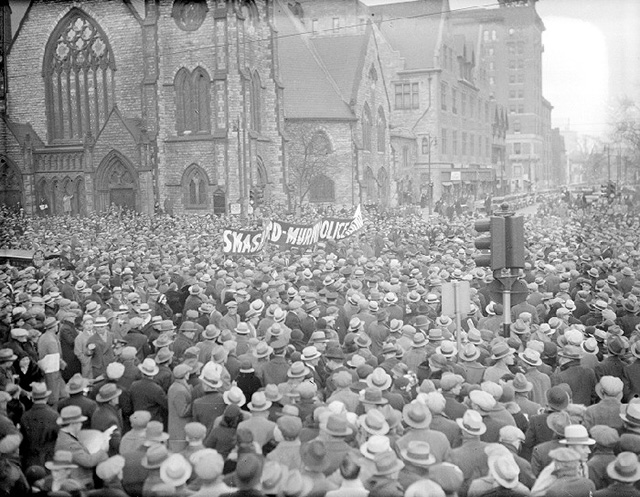
Ron Alpern, Diane Feeley
Visit the gravesites of the victims of the Ford Hunder March on March 7, 1932.
See Hunger March Accounts
Dave Moore - Labor Minute, this DPTV /WTVS video shares the insights of a Hunger Marcher, UAW officer, and Civil Rights activist
The Ford Hunger March: Five Martyrs for Justice, Jim Pita’s Michigan Labor History Society newsletter feature
Ford Hunger March, Kristen Chinery’s discussion from the Walter Reuther Library website.
Fort St. Bridge Interpretive Park this initiative spearheaded by MotorCities, the Fort-Rouge Gateway Coalition (FRoG), and the Friends of the Rouge reclaims the natural habitat of the lower Rouge River and commemorates the Hunger March following the Michigan Department of Transportation’s reconstruction of the bridge.
deaths during unemployed march that was attacked in 1932