


Explore thousands of items. Use clickable links under collections and library for broad categories. Search by keyword (including topic,city, state.) Limit by time period, type of item, region. See our search tips page for more assistance.
Collections
Library
Type
Region
Coverage:
-
Published:
-
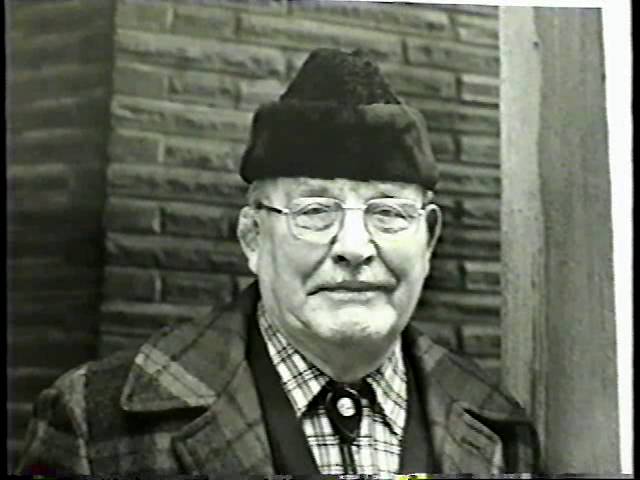
Ron Magden, Seattle Civil Rights, Labor History Project
In 1934, Pacific Coast longshoremen went on strike to win better working conditions, control over the hiring process, and coast-wide union recognition.
A twelve minute documentary on the 1934 West Coast Longshoremen Strike containing original footage from the event.

Ron Verzuh
University of toronto Press (2022)
In 1938, the Congress of Industrial Organizations (CIO) came to organize the International Union of Mine, Mill and Smelter Workers (Mine Mill) in Trail, British Columbia. Six years later it was recognized as the legal representative of more than 5,000 workers at a smelter owned by the powerful Consolidated Mining and Smelting Company of Canada (CM&S). Smelter Wars aims to unfold the historic struggle of the working people who built the city of Trail. The book recounts the various difficulties of the rural community, providing glimpses into the political and social life in the smelter city, as well as the turbulent years marked by economic depression, war, and Cold War intolerance. Ron Verzuh draws upon archival and periodical sources, including the mainstream and labour press, to explore the CIO's complicated legacy in Trail as it battled a wide range of antagonists: a powerful employer (CM&S), a company union, local conservative citizens, and Cooperative Commonwealth Federation (CCF) leadership. More than a history of a union, Smelter Wars is a cultural study of a community that has been shaped by decades of corporate welfare."-- Provided by publisher
Smelter Wars is a cultural study of a community that has been shaped by decades of corporate welfare.

Ron Verzuh, Pacific Northwest Labor History Association
Oregon's Working People and Their Organizations
Given the general absence of labor history as part
of the public school curriculum, and the paucity of
college and university courses on the subject, this
chronology presents an opportunity to increase
awareness of labor events of the past and to act as a
resource for further research by historians,
educators, trade unionists, and others.
The booklet is designed for use in classrooms, at
union meetings, and educational workshops. It can
also serve as an outreach tool to promote labor
history at public gatherings, conferences, and laborsponsored
events.
Students of labor history are encouraged to
continue collecting and recording the significant
labor events that help us understand the Oregon
worker’s role in developing a civil society.
300 entries designed for use in classrooms, at union meetings, and educational workshops.

Ronald D. Cohen
The University of North Carolina Press (2016)
While music lovers and music historians alike understand that folk music played an increasingly pivotal role in American labour and politics during the economic and social tumult of the Great Depression, how did this relationship come to be? Ronald D. Cohen sheds new light on the cultural history of folk music in America, detailing the musicians, government agencies, and record companies that had a lasting impact
Sheds new light on the cultural history of folk music in America, detailing the musicians, government agencies, and record companies that had a lasting impact

Ronald E. Magden, University of Washington
Publications, interview, photos, film on 1934 Longshore strike collected about and on "Ronald E. Magden, labor historian and professor at Tacoma Community College. Magden's oral history interviews with Puget Sound longshoreman and several films and radio programs derived from those interviews constitute a second legacy. Equally important, Ron has collected thousands of documents, articles, and photographs that now are preserved in the Ronald E. Magden Collection in the University of Washington Special Collections Library."
Digital collection of writings of and documents collected by Ronald E. Magden.

Ronald E. Ostma, Harry Littell, Linda A. Ries
Penn State University Press (2016)
Through the photography of William T. Clarke, explores the impact of the logging industry on late nineteenth- and early twentieth-century north-central Pennsylvania"-- Provided by publisher
how the religion of rural Black communities in the social sciences laid the seeds to the ideas of the culture of poverty after World War II
Ronald G. Pettengill Labor Education Fund
Rochester Labor HIstory hosts a film series and educates members about local history, including the 1946 general strike
a valuable effort to preserve local history in a medum industrial city

Ronald G. Pettengill Labor Education Fund
Photos from spectrum of industries in the area of Rochester, New York
images of workers in Rochester, New York

Ronald L. Lewis
University of Pittsburgh Press (2023)
America's emergence as a global industrial superpower was built on iron and steel, and despite their comparatively small numbers, no immigrant group played a more strategic role per capita in advancing basic industry than Welsh workers and managers. They immigrated in surges synchronized with the stage of America's industrial development, concentrating in the coal and iron centers of Pennsylvania and Ohio.
This book explores the formative influence of the Welsh on the American iron and steel industry and the transnational cultural spaces they created in mill communities in the tristate area--the greater upper Ohio Valley, eastern Ohio, northern West Virginia, and western Pennsylvania--including boroughs of Allegheny County, such as Homestead and Braddock. Focusing on the intersection of transnational immigration history, ethnic history, and labor history, Ronald Lewis analyzes continuity and change, and how Americanization worked within a small, relatively privileged, working-class ethnic group
CONTENTS
Preface & Acknowledgments ix
1. The Transplanted 3
2. Transnational Institutions 29
3. Early American Iron and the Welsh Plan 55
4. The Age of Steel Begins 85
5. Welsh Tinplate and the McKinley Tariff 125
6. The Rise of the Trusts and Decline of Greater Alcania 157
7. Gender, Transnational Work Culture, and the
Hetty Williams Affair 183
8. Republicanism and the Search for Success 202
Epilogue 235
Appendix 1. Firms of the American Tin-Plate Company 241
Appendix 2. Firms of the United States Steel Company 24
how Americanization worked within a small, relatively privileged, working-class ethnic group of Welsh immigrants

Ronald L. Mize
Lexington Books (2016)
As the first and largest guestworker program, the U.S.-Mexico Bracero Program (1942-1964) codified the unequal relations of labor migration between the two nations. This book interrogates the articulations of race and class in the making of the Bracero Program by introducing new syntheses of sociological theories and methods to center the experiences and recollections of former Braceros and their families
race and class in the making of the Bracero Program

Ronald P. Formisano
Johns Hopkins University Press (2015)
The growing gap between the most affluent Americans and the rest of society is changing the country into one defined--more than almost any other developed nation--by exceptional inequality of income, wealth, and opportunity. This book reveals that an infrastructure of inequality, both open and hidden, obstructs the great majority in pursuing happiness, living healthy lives, and exercising basic rights. A government dominated by finance, corporate interests, and the wealthy has undermined democracy, stunted social mobility, and changed the character of the nation. In this tough-minded dissection of the gulf between the super-rich and the working and middle classes, Ronald P. Formisano explores how the dramatic rise of income inequality over the past four decades has transformed America from a land of democratic promise into one of diminished opportunity. Since the 1970s, government policies have contributed to the flow of wealth to the top income strata. The United States now is more a plutocracy than a democracy. Formisano surveys the widening circle of inequality's effects, the exploitation of the poor and the middle class, and the new ways that predators take money out of Americans' pockets while passive federal and state governments stand by. This data-driven book offers insight into the fallacy of widespread opportunity, the fate of the middle class, and the mechanisms that perpetuate income disparity."
This book reveals that the American infrastructure of inequality obstructs the great majority in pursuing happiness, living healthy lives, and exercising basic rights.

Ronald V. Morris
University of Notre Dame Press (2019)
In Yountsville: The Rise and Decline of an Indiana Mill Town, Ronald Morris and collaborators examine the history and context of a rural Midwestern town, including family labor, working women, immigrants, and competing visions of the future. Combing perspectives from history, economics, and archeology, this exploration of a pioneering Midwestern company town highlights how interdisciplinary approaches can help recover forgotten communities.
The Yount Woolen Mill was founded during the pioneer period by immigrants from Germany who employed workers from the surrounding area and from Great Britain who were seeking to start a life with their families. For three generations the mill prospered until it and its workers were faced with changing global trade and aging technology that could not keep pace with the rest of the world.
Deindustrialization compelled some residents to use education to adapt, while others held on to their traditional skills and were forced to relocate. Educators in the county seat offered Yountsville the opportunity to change to an education-based economy. Both the educators and the tradesmen associated with the mill believed their chosen paths gave children the best opportunities for the future. Present-day communities working through industrialization and deindustrialization still push for educational reform to improve the lives of their children. In the Midwest, many stories exist about German immigrants working in urban areas, but there are few stories of immigrants as capitalists in rural areas. The story of the Yount family is one of an immigrant family who built an industry with talent, labor, and advantage. Unfortunately, deindustrialization, dislocation, adaptation, and reuse were familiar problems in the Midwest. Archeologists, scholars, and students of state and local history and the Midwest will find much of interest in this book"-- Provided by publisher
history and context of a rural Midwestern town, including family labor, working women, immigrants, and competing visions of the future
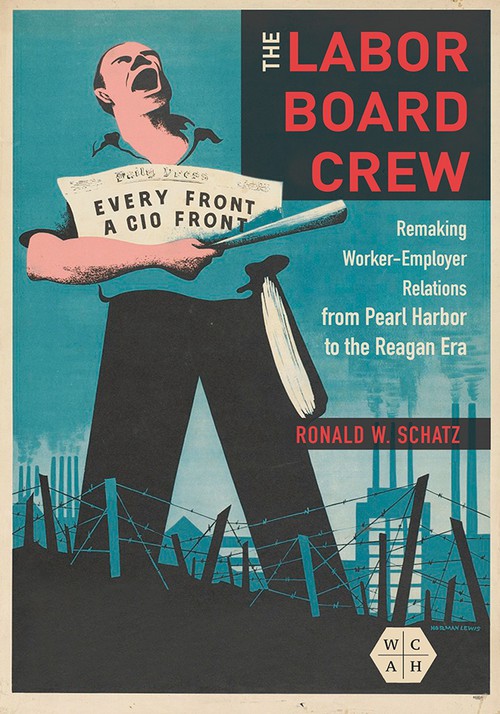
Ronald W. Schatz
University of Illinois Press (2021)
Ronald W. Schatz tells the story of the team of young economists and lawyers recruited to the National War Labor Board to resolve union-management conflicts during the Second World War. The crew (including Clark Kerr, John Dunlop, Jean McKelvey, and Marvin Miller) exerted broad influence on the U.S. economy and society for the next forty years. They handled thousands of grievances and strikes. They founded academic industrial relations programs. When the 1960s student movement erupted, universities appointed them as top administrators charged with quelling the conflicts. In the 1970s, they developed systems that advanced public sector unionization and revolutionized employment conditions in Major League Baseball. Schatz argues that the Labor Board vets, who saw themselves as disinterested technocrats, were in truth utopian reformers aiming to transform the world. Beginning in the 1970s stagflation era, they faced unforeseen opposition, and the cooperative relationships they had fostered withered. Yet their protégé George Shultz used mediation techniques learned from his mentors to assist in the integration of Southern public schools, institute affirmative action in industry, and conduct Cold War negotiations with Mikhail Gorbachev"-- Provided by publisher
the story of the team of young economists and lawyers recruited to the National War Labor Board to resolve union-management conflicts during the Second World War.
Roosevelt University, Elisabeth Balanoff
At portal, enter Labor Oral History Project to get to the files. These are recordings and transcripts from 89 Oral History interviews of Illinois workers completed in the 1970s and 80s, including those relevant to the history of the Industrial Workers of the World, individual unions, and more. United Packinghouse Workers, Industrial Workers of the World, United Farm Workers Amalgamated Clothing & Textile Workers Union, Amalgamated Meat Cutters, United Electrical Workers, Steelworkers, Coalition of Labor Union Women, Addie Wyatt, Irving Abrams, Eliseo Medina, Ralph Helstein, Joe Germano, Herbert March, Irving Ross, Cathering McCullough, Sophie Kosciolowski, Doris Arrington, John Cook, Sam Dolgoff, Esther Dolgoff, Katherine Conroy, Alice Peurala, George Patterson, Fred Thompson, Frank Rosen, and many more, covering an array of industries and struggles in the Chicago area. There is no index of these but all of the items are transcribed or available digitally at this site. The transcripts are at the links.
72 total oral history interviews covering a range of occupations/industries from mid-20th century. At portal, enter Labor Oral History Project to access

Rootsweb
Lots of images and details about Coal Miners of Kentucky "This site is dedicated to the Coal Miners of Kentucky, who worked deep in the cold dark tunnels with only a carbide lamp to light the way. Many lost their lives due to the neglect of operators who in some cases robbed the miner of his dignity, his honor and his rights to earn a decent living for his family. I am a coal miners daughter. One of eight children who lived in a four room company house, in a company camp, traded at the company store, with company scrip. To get silver money a miner got 85 cents in silver for every dollar in scrip. My dad did owe his soul to the company store." - Elva Nolan Morgan
A memorial website for Kentucky coal miners that features historical photographs, statistics for miner deaths, information on miners' strikes, and detailed by-county information on coal companies.

Rosalyn Baxandall
Vintage Books (1976)
Contains primary source materials and sections on black slaves, Lowell, women on the Oregon trail, nursing, white slavery, letters from black migrants, the Lawrence textile strike, the Triangle fire, and child care
To 1820. The first American women. The Ojibwa woman / Ruth Landes
Home work: Home manufacturing: On making cloth / Alice Morse Earle; Change work and the whang / Alice Morse Earle
Healing, the United States practical receipt book
Industry / Edith Abbot
Ads
Servitude. Indentured servants: Oppression and resistance / Lucy Salmon; Sexual exploitation / Richard B. Morris; Black slaves / Ellen Betts, Joanna Draper, Elizabeth Sparks
Industrial slavery / Robert Starobin
1820-1865. Dissent. Factory girls / Harriet Robinson and Lucy Larcom
Rules and regulations / Poignaud and Plant Boarding House, Lowell Manufacturing Company
Speed-ups / Lowell Voice of Industry and Eliza R. Hemingway
Boot and shoe making / Helen Summer
Immigrant Women / Robert Ernst
Protests. Women’s strikes / John Andrews and W.D.P. Bliss
Labor Reform / John Andrews and W.D.P. Bliss
Factory life / Julianna
Journey. Women on the Oregon Trail / Amy Kesselman
Recollections of a pioneer woman / Harriet Taylor Upton
Controversy. The nursing debate / American Medical Times
A union’s position / William Sylvis
A feminist’s view / Caroline Dall
1865-1890. Industrialization—the price. Labor agents / Reports to Dwight Manufacturing
Job displacement / Edith Abbot
Prostitution / William Sanger
“White slavery” / California State Senate Committee
Sweatshops / Louis Levine
Industrialization: the consequences. Blacklisting / Letters to Dwight Manufacturing
Petitions / Workingman’s Advocate
Expulsion / Susan B. Anthony and the National Labor Union
Laundry workers / John Andrews and W.D.P. Bliss
The laundry cooperative / Kate Mullany
Working Women’s Protective Union / Emily Verdery
Knights of Labor / Leonora Barry
A fate worse than death / Terence Powderly
1890-1920. Migrants and immigrants. Letters from black migrants
Rosa Cristoforo comes to the United States / Rosa Cristoforo
An Irish hired girl / Mary Heaton Vorse
Americanization / Florence S. Wright
The human cost of industry. Tenement house life / Henry Moscowitz
Single women in the city / Esther Packard
Mill town wives / Margaret Byington
Down on the farm / U.S. Department of Agriculture
Housewife vs. shop and factories / Mary Trueblood
The night shift / Life and Labor
Home work / Mary Van Kleeck
Industrial health: case no. 45, Sadie G. / New York State Factory Investigating Committee
The effect of industrial fatalities upon the home / Crystal Eastman
Working class power. The A.F.L. view of women workers / Edward O’Donnell
The trade union woman / Alice Henry
Women in trade unions / Lillian Matthews
Ethnic differences among women workers / Mary Van Kleeck
Birth of a rank-and-file organizer / Agnes Nestor
A letter of protest / Life and Labor
Strikes and the tradition of struggle. Kosher meat boycotts / New York Times
The shirtwaist strike / Helen Marot
The Lawrence textile strike / Elizabeth Gurley Flynn
The Women’s Trade Union League at Lawrence / Sue Ainslie Clark
The Triangle fire / Rose Schneiderman
Women streetcar conductors fight layoffs / U.S. Women’s Bureau
Women’s consciousness and class conflict. The lowest paid workers / Theresa Malkiel
Birth control / Margaret Sanger
A nine-hour day for domestic servants / Inez Goodman
Why do people look down on working girls? / Lucy A. Warner
Senator’s vs. working women / Mollie Schepps
1920-1940. Homemaking. Changes in housework / Robert and Helen Lynd
Housework for the southern farm worker / Margaret Hagood
Woman’s place / work place. Woman’s place is at the typewriter / Margery Davies
Pilgrim’s Progress in a telephone exchange / A. Pilgrim
The Depression. Family life / Wight Bakke
Shall married women work? / Ruth Shallcross
The limitations of the NRA / Serena Elizabeth Ashford
Discrimination in the New Deal / Letters from the South
Women in the union movement. Working women respond to the Equal Rights Amendment / Elizabeth Christman
The A.F.L. and women / Ann Washington Craton
Protest to a shop steward / Sarah Rozner
Mill mother’s lament / Ella May Wiggins
Joining the auxiliary / Meridel Le Sueur
Rank and file organizing / Stella Nowicki
1940-1955. War work. Mothers in overalls
Black women in war production / Richard Jefferson
Shipyard diary of a woman welder / Augusta Clawson
Child care / U.S. Women’s Bureau
Worker’s services / Kathryn Blood
The feminine mystique. Why I quit working / Jennifer Colton in Good Housekeeping
I denied my sex / True Romance
The feminine reality. Postwar plans of women workers / U.S. Women’s Bureau
Puerto Rico women / Helen Icken Safa
Working mothers and delinquency / Joyce Cowley
The kidnapping of a C.I.O organizer / Edna Martin
A thankless job: union organizer / Sophie Stupek
1955-1975. Home and job: the double day. Diary of a student-mother-housewife-worker / Marion Hudson
The Paradise Lounge: working as a cocktail waitress / Michele Gubbay
Health is women’s work / Susan Reverby
Your clerical workers are ripe for unionism / Harvard Business Review
Today and tomorrow. Welfare is a woman’s issue / Johnnie Tillmon
The Charleston Hospital strike
The women of the boycott / Barbara Baer and Glenna Matthews
Fighting sexism on the job / Helen Stanton
The Equal Rights Amendment / Myra Wolfgang and Georgianna Sellers
Gay workers organize / Workforce
What do I do for the next twenty years? / Susan Jacoby
The coalition of labor-union women / Annemarie Tröger
Uses selections from primary sources to trace the evolution of women's work in America

Rosalyn; Gordon, Linda; Reverby, Susan Baxandall
Pantheon Books (1976)
Uses selections from diaries, popular magazines, historical works, oral histories, letters, and fiction to trace the evolution of women's work in America
Uses selections from primary sources to trace the evolution of women's work in America

Rosanne Currarino
University of Illinois Press (2011)
Rosanne Currarino traces the struggle to define the nature of democratic life in an era of industrial strife. As Americans confronted the glaring disparity between democracy's promises of independence and prosperity and the grim realities of economic want and wage labor, they asked, "What should constitute full participation in American society? What standard of living should citizens expect and demand?" Currarino traces the diverse efforts to answer these questions, from the fledgling trade union movement to contests over immigration, from economic theory to popular literature, from legal debates to social reform. The contradictory answers that emerged--one stressing economic participation in a consumer society, the other emphasizing property ownership and self-reliance--remain pressing today as contemporary scholars, journalists, and social critics grapple with the meaning of democracy in postindustrial America.
Introduction: The Labor Question in late 19th century.
The Cant of Economy: Narratives of Depression in the 1870s 11
Meat versus Rice: Anti-Chinese Rhetoric and the Problem of Wage Work 36
The Value of Wages: Historical Economics and the Meanings of Value 60
“Labor Wants More!”: The AFL and the Idea of Economic
The End of the Labor Question
Afterword. Residues of the Labor Question
Traces the working-class struggle to define the nature of democratic life in an era of increasing inequality

Rose Schneiderman, History Matters
One of the greatest industrial tragedies in U.S. history occurred on March 25, 1911, when 146 workers, mostly young immigrant women, died in a fire at the Triangle Shirtwaist company in New York City. The victims had been trapped by blocked exit doors and faulty fire escapes. The aftermath of the catastrophe brought grief and recriminations. Protest rallies and memorial meetings were held throughout the city. During one meeting at the Metropolitan Opera House, tension broke out between the working-class Lower East Siders who filled the galleries (and saw class solidarity as the ultimate solution to the problems of industrial safety) and the middle- and upper-class women in the boxes who sought reforms like creation of a bureau of fire prevention. The meeting would have broken up in disorder if not for a stirring speech by Rose Schneiderman, a Polish-born former hat worker who had once led a strike at the Triangle factory. Although she barely spoke above a whisper, Schneiderman held the audience spellbound.
(teaching document) Rose Schneiderman's powerful words about the bitter experiences of organizing and the Triangle Fire
Rosemary Feurer
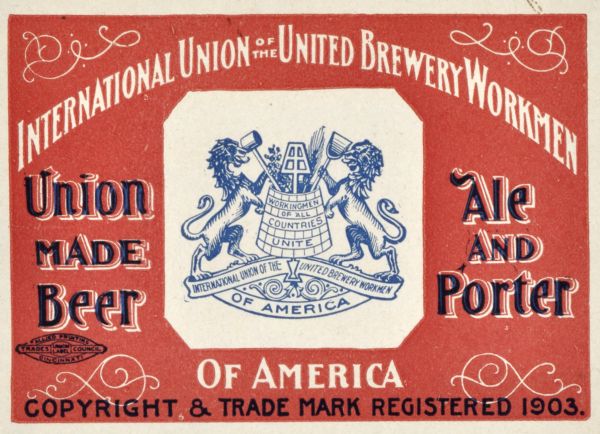
The influence of radical and socialist ideas in the labor movement is evident in the following document. It is the "Declaration of Principles of the United Brewery Workmen of the United States," published in St. Louis Labor, January 24, 1903. Though the Brewery Workers were in the American Federation of Labor, they traced their lineage to the Knights of Labor, believed in industrial unionism and class conflict, and were dominated for years by socialists.
[Full text below]
DECLARATION OF PRINCIPLES OF THE UNITED BREWERY WORKMEN OF THE UNITED
STATES
In our society of to-day there are two classes whose interests are directly opposed to
each other. On the one side stands the propertied class, that owns almost all the lands, all the houses, the factories, the means of communication, all the machines and raw material; all the means of life. Compared with the nation at large this class is only a small minority.
On the other side stand the workers, who possess nothing but their physical and
intellectual labor power, and this they are compelled to sell to those who own the means of production. The workers number millions.
It is to the interest of the propertied class to "buy labor at the cheapest possible price; to
produce as much as can be produced, and to heap up wealth. The few hundreds of thousands who compose the propertied class take from the workers the greater part of the wealth they have created.
Of all the product of their toil the millions of workers receive only just as much as enables them to eke out a miserable existence.
Every new invention in machinery, every new discovery of natural forces, inures to the
benefit of the propertied class alone, which is still further enriched thereby. Human labor is, as a consequence, being constantly more and more displaced.
The superfluous workers have to live, and therefore have to sell their labor at a price they can get. Labor falls more and more in value; the working people become all the time more and more impoverished; their consumptive capacity continually declines; they are able to buy less and less of the products they have produced; the sale of goods stops, production is checked, and in places it comes altogether to an end. The crisis has come.
The propertied class has taken into its service the state, the police and the militia, the
press, and the pulpit, whose task is to declare the sanctity of and to defend the possessions that others have created for them.
On the other side stand the workers in their millions; without the means of life; without
rights; defenseless; betrayed and sold out by the state, press and pulpit. It is against them that the weapons of the police and the militia are directed.
Taking all these facts into consideration, we declare:
1. That in order to emancipate themselves from the influence of the class that is hostilely arrayed against them, the working class must organize locally, nationally and internationally; must oppose the power of capital with the power of organized labor; and must champion their own interests in the workshops, and in municipal, state and national affairs.
2. National and international unions are in a position to exercise a great influence on
production, on wages, on the hours of labor; to regulate the questions of apprenticeship; to uphold their members in various emergencies.
3. The struggles which they naturally have to wage with the organized power of capital
bring them to a recognition of the fact that individual unions must unite in one large league, which shall proclaim the solidarity of the interests of all, and give mutual support. Soon thereafter will come the recognition of the fact that our whole system of production rests exclusively upon the shoulders of the working class, and that this latter can, by simply choosing to do so, introduce another, a more just system. The self-conscious power of capital, with all its camp-followers, is confronted with the self conscious power of labor.
4. There is no power on earth strong enough to thwart the will of such a majority,
conscious of itself. It will irresistably tend toward its goal. It has natural right upon its side. The earth and all its wealth belong to all. All the conquests of civilization are an edifice, to the rearing of which all nations for thousands of years past have contributed their labor. The results belong to the community at large. It is organized labor that will finally succeed in putting these principles into actual practice, and introducing a condition of things in which each shall enjoy the full product of his toil. The emancipation of the working people will be achieved only when the economic and political movements have joined hands.
AIMS AND OBJECTS
The organization seeks to promote the material and intellectual welfare of the United Brewery Workers of the country, by means of:
1. Organization
2. Education and enlightenment by word and pen.
3. Reduction of the hours of toil, and increase of wages.
4. Active participation in the political labor movement of the country, on independent
labor class lines.
A document detailing the St. Louis United Brewery Workingmen's ideological underpinnings.
Rosemary Feurer
University of Illinois Press (2006)
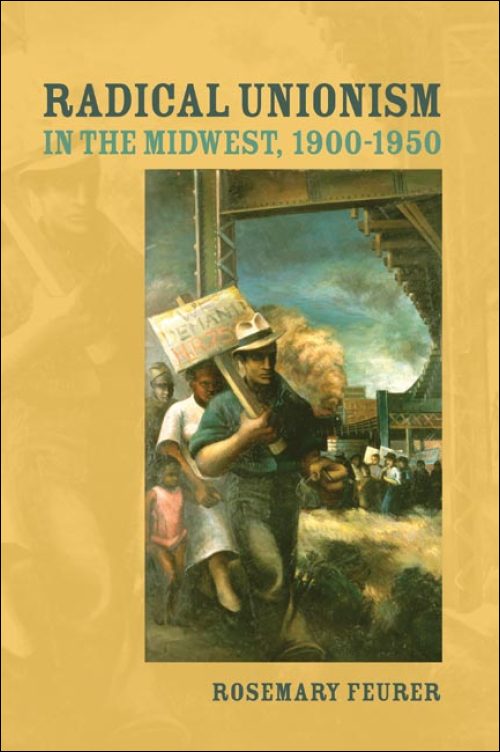
The dynamic relationship between union strategy and the ideals of radicalism
District 8 of the United Electrical, Radio, and Machine Workers (UE) developed a style of unionism designed to confront corporate power but also act as a force for social transformation in their community and nation. Rather than the large electrical industry that is usually the focus of the CIO, this district successfully organized virulently anti-union companies and was developing a community-based approach that was snuffed out with the Cold War backlash.
Rosemary Feurer examines the fierce battles between these Midwestern electrical workers and the bitterly anti-union electrical and metal industry. Exploring the role of radicals in local movement formation, Feurer reveals a "civic" unionism that could connect community and union concerns to build solidarity and contest the political economy. District 8's spirited unionism included plant occupations in St. Louis and Iowa; campaigns to democratize economic planning; and strategies for national bargaining that elected officials inevitably branded as part of a communist conspiracy. Though destroyed by reactionaries and an anticommunist backlash, District 8 molded a story that tells another side of the labor movement's formation in the 1930s and 1940s, and can inform current struggles against corporate power in the modern global economy. --from the publisher
How a midwest district of the United Electrical Workers-CIO, the mid-20th century insurgent union movement was built from the ground up, in St, Louis, Missouri, Iowa, Indiana. Explores employer repression and how it was countered, efforts at economic planning and environmentalism.

Rosemary Feurer
The "Cradle of Liberty" and the birth of the St. Louis labor movement in 1877
Washington Avenue Massacre, and the working class campaign of 1900
The women in the garment trades who fought for a union, led by Fannie Sellins
Telephone workers efforts to organize in the early 20th century
How a Union Station worker connected economic and civil rights
The site of the second-largest sit-down strike on record
When Sears was pressured to open up jobs to Black women
A walking tour of sites important to the development of St. Louis working-class life and politics
Rosemary Feurer, Bob Bussel
A compilation from historians and labor educators of powerpoints they have used in teaching
powerpoints and graphs for teaching labor history and inequality

Rosemary Feurer, Chad Pearson
University of Illinois Press (2017)
Against Labor highlights the tenacious efforts by employers to organize themselves as a class to contest labor. Ranging across a spectrum of understudied issues, essayists explore employer anti-labor strategies and offer incisive portraits of people and organizations that aggressively opposed unions. Other contributors examine the anti-labor movement against a backdrop of larger forces, such as the intersection of race and ethnicity with anti-labor activity, and anti-unionism in the context of neoliberalism.
A timely and revealing collection, Against Labor deepens our understanding of management history and employer activism and their metamorphic effects on workplace and society.
Contributors: Michael Dennis, Elizabeth Esch, Rosemary Feurer, Dolores E. Janiewski, Thomas A. Klug, Chad Pearson, Peter Rachleff, David Roediger, Howard Stanger, and Robert Woodrum.Introduction: Against Labor;
1 Scientific Management, Racist Science, and Race Management;
2 "Free Shops for Free Men"? The Challenges of Strikebreaking and Union-Busting in the Progressive Era;
3 Employers' Path to the Open Shop in Detroit, 1903-7;
4 Race, Unionism, and the Open-Shop Movement along the Waterfront in Mobile, Alabama;
5 Through a Glass, Darkly: The NLRB, Employer Counteroffensives, Investigative Committees, and the CIO;
6 The Strange Career of A.A. Ahner: Reconsidering Blackjacks and Briefcases.
7 A Moderate Employers' Association in a "House Divided": The Case of the Employing Printers of Columbus, Ohio, 1887-1987
8 Litigating for Profit: Business, Law, and Labor in the New Economy South;
9 Capital and Labor in the 21st Century: The End of History? ; Glossary; Contributors; Index
A collection of essays that highlights the tenacious efforts by employers to organize themselves as a class to contest labor.

Rosemary Feurer, LaborVision
Struggles of workers at the A.E. Staley corn sweetener plant in Decatur, IL, this program is an excellent review of the basic grievances behind the decision to fight using work-to-rule. Shows the dangerous chemicals used at the plant, the Staley company becoming dangerous to the health and safety of its 800 workers and the community around it. Interviews with workers who talk about the horrors of a particular incident are a powerful indictment of corporate greed and indifference. Excellent sections on the hidden corporate web of control that Staley is part of and on issues of health and safety in the workplace. Can be followed up with Struggle in the Heartland.
Struggles of workers at the A.E. Staley corn sweetener plant in Decatur, IL, this program is an excellent review of the basic grievances behind the decision to fight using work-to-rule.
Museum/Exhibits
Tours
Maps
Digital Projects
Organizations
Sites
Film/Video
Audio/Interview
Podcast/Program
Text/Document
Image
Graphs/Data
Timeline
Southwest
West
Midwest
Southeast
Northeast
Mexico
Canada
Global
Books
Teaching
Lectures
Digital Archives
Journals
Bibliographies
Topic Intro